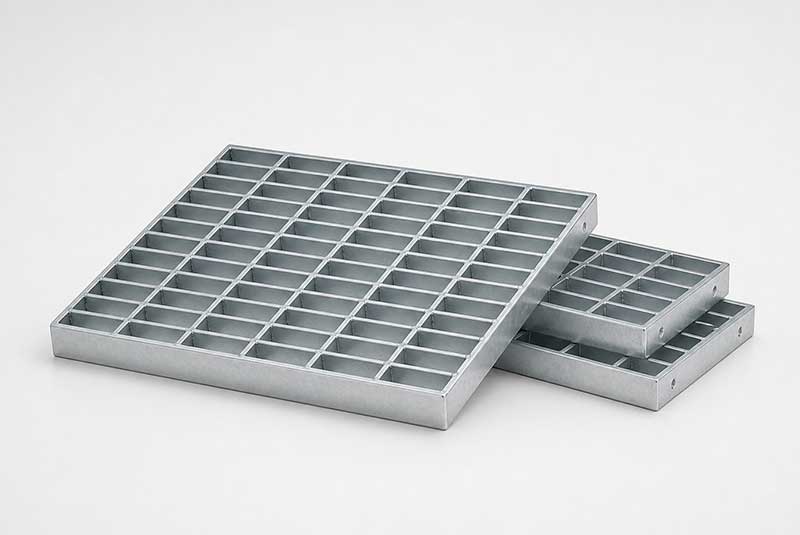
Table of Contents
Make the decision measurable
Street Drain Cover should be specified around vehicle paths and pedestrian crossing directions. For service roads beside factory buildings, the useful starting point is the installed duty and the interface that determines whether the proposal will work. Develop the enquiry around a measurable decision, so the supplier can respond to the actual installation rather than to a broad product name.
A street-side drain may be crossed by pedestrians, maintenance vehicles, and turning delivery traffic. Map those movements before selecting a cover. Wheel position and turning action can influence the demand on the cover, frame, and restraint. The pedestrian interface needs attention to openings and level changes. Use the project's governing design basis and require evidence for the proposed assembly. The word street does not by itself define the required performance or establish approval for a specific traffic duty.
This guide focuses on service roads beside factory buildings. It addresses the decision behind the enquiry rather than restating every general feature of a metal grid. The practical objective is to prevent a roadway label being treated as a universal load classification. The evidence to request is a project traffic brief and a flush-level installation detail. Keep that requirement attached to the released drawing when asking for a street drain cover proposal.
Specify the load basis for the whole crossing for street drain cover
Apply this check to street drain cover by linking the proposed geometry to vehicle paths and pedestrian crossing directions. Use the actual location in service roads beside factory buildings as the reference.
A traffic duty requires more than the total vehicle mass or a broad heavy-duty label. Obtain the relevant wheel demands, contact areas, route, turning or braking conditions, and the design basis specified by the project engineer. The panel, frame, restraint, and surrounding structure should be reviewed as an assembly.
Keep the proposed geometry connected to the calculation or testing evidence. A classification or label applies only within its stated basis and does not make every visually similar product equivalent. Review the finished level and pavement condition because settlement can change seating and impact. If the operating vehicle or route changes, revisit the assessment. Procurement should request a clear response to the defined duty rather than translating a catalogue photograph into a traffic approval claim.
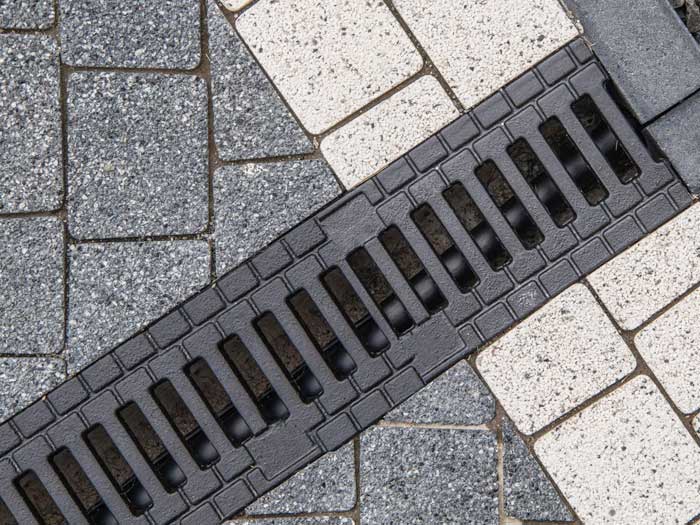
Map the actual wheel contact and route for street drain cover
When reviewing street drain cover, keep a project traffic brief and a flush-level installation detail with the supplier response. This gives the technical discussion a specific acceptance reference.
Wheel diameter, tread width, material, and swivel behaviour influence how a grid is used. A narrow wheel may follow an opening, catch at a joint, or create a concentrated demand on only a few bearing bars. The route through a turn can differ from the route during straight travel.
Obtain the operating wheel loads and contact information from the equipment owner or manufacturer. Include the carried load and any relevant project allowance defined by the responsible designer. Show where the wheels cross the supports and the grid. A representative rolling assessment can help evaluate usability, but it does not replace a structural assessment. Keep these two questions separate so that comfortable movement is not mistaken for proof of load capacity, or adequate strength for proof of a suitable wheel route.
Review the finished surface under the governing access rules for street drain cover
For street drain cover, a change that affects vehicle paths and pedestrian crossing directions should be declared before production. Review the effect on adjacent components and the installation sequence.
A public route requires an assessment of its completed surface, including opening dimensions, orientation, level changes, and stability. Establish the jurisdiction and route classification with the project team. Where US ADA requirements apply, use the current governing standards and the responsible accessibility review rather than a supplier's general label.
The enquiry should state the required clear openings and travel direction. Review frames, joints, and the adjacent pavement as part of the same surface. Images in a product article are illustrative and cannot prove that a proposed pattern complies. A physical sample can help confirm geometry, but the entire installed route still needs review. Keep accessibility acceptance separate from drainage performance and structural capacity.
A worked review scenario: service roads beside factory buildings
Consider a hypothetical enquiry for street drain cover in service roads beside factory buildings. The buyer receives two proposals that share a broad product description. Proposal A explicitly addresses vehicle paths and pedestrian crossing directions and includes a project traffic brief and a flush-level installation detail. Proposal B omits that evidence and assumes that the existing interface is acceptable. The example is an enquiry comparison, not a claim about an actual Senfa customer or a completed project.
The buyer should first resolve the missing information in Proposal B. A lower price does not answer whether the proposal prevents a roadway label being treated as a universal load classification. Ask the supplier to identify its assumptions and show the completed assembly against the same released requirements. The two offers become comparable only when their interfaces, fabrication scope, and evidence are clear.
The decision record for street drain cover should name the accepted drawing and explain why the selected arrangement meets the defined duty. If the project cannot yet provide a project traffic brief and a flush-level installation detail, keep the technical question open. The next useful step is a survey, sample, calculation, or coordinated drawing appropriate to that missing input; repeating a general capacity or quality claim will not close it.
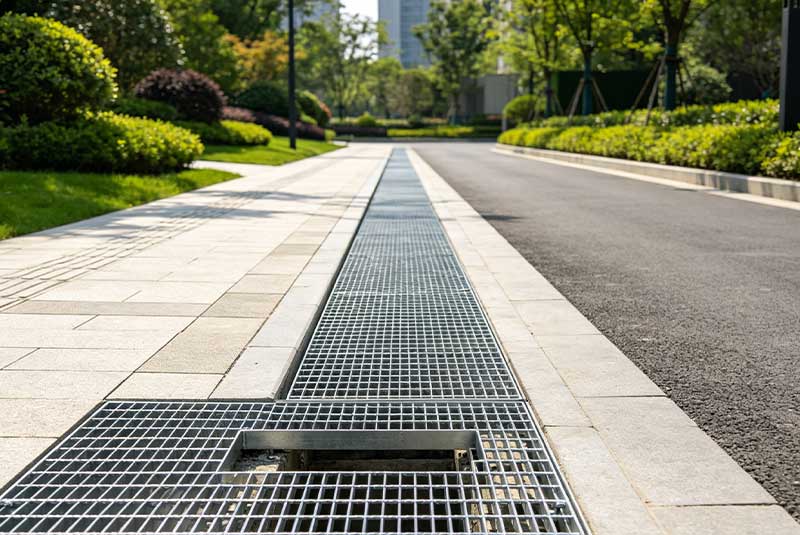
Compare the available approaches: street drain cover
Use the table to structure a street drain cover discussion. It identifies different supply approaches rather than ranking products without project data. For this enquiry, carry vehicle paths and pedestrian crossing directions through every column.
| Approach | When it may fit | Evidence to review |
|---|---|---|
| Loose replacement cover | The retained frame has been surveyed and accepted | Confirm seating, movement, removal, and finished level |
| Cover-and-frame package | New channels or unsuitable retained supports | Coordinate frame anchorage and surrounding civil work |
| Special traffic or public-route arrangement | The duty introduces additional project requirements | Request evidence for the complete installed assembly |
For street drain cover, the comparison is complete only after declared deviations are resolved. Keep pricing, technical acceptance, and delivery responsibilities visible. A useful offer states what is supplied and what the buyer or site contractor still needs to provide.
Information to send with the enquiry: street drain cover
A street drain cover enquiry should include a location plan, dimensions with units, the intended duty, and the surrounding support or connection geometry. For service roads beside factory buildings, highlight vehicle paths and pedestrian crossing directions rather than burying it in a general note. Attach a project traffic brief and a flush-level installation detail where it is already available, or identify who will provide it before fabrication.
Include quantities by component mark, material and finish requirements, inspection documents, and the destination handling constraints. Define whether accessories, frames, special fabrication, packing, and site assembly are included. Ask the supplier to list any deviation against the released information. This prevents a roadway label being treated as a universal load classification from remaining hidden as an assumption in the quotation.
Keep related terms such as metal drain covers, drainage steel grating with frame, ditch cover steel grating connected to the same duty brief when searching catalogues. Similar wording does not make different constructions interchangeable. For street drain cover, the approved physical definition and its acceptance evidence take precedence over a short catalogue description.
Acceptance and change control: street drain cover
Before releasing street drain cover for production, confirm that the drawing, component schedule, and supplier response describe the same revision. The review should explicitly close the question of vehicle paths and pedestrian crossing directions. Record acceptance against a project traffic brief and a flush-level installation detail and identify any remaining site-dependent checks.
At delivery, match the marks and quantities to the packing list and examine visible damage before the components are distributed. During installation, check the actual interface and the completed secured condition. The practical warning for this application remains a roadway label being treated as a universal load classification. A correct-looking component should not be used to dismiss an unresolved interface or duty question.
Changes to the equipment, route, exposure, or support can invalidate earlier assumptions. Review them before modifying a finished part. Preserve the final drawing and records for future street drain cover replacement so that the next order begins with the accepted installation rather than a new guess.
Reference and related Senfa resources: street drain cover
The US Access Board explains opening dimensions, travel orientation, and surface conditions for applicable accessible routes. Use it with the governing project requirements; an article or product image is not compliance evidence. See the US Access Board guide to floor and ground surfaces.
For the relevant product family, review Senfa trench cover and the steel grating trench cover product page. Use drawing-based fabrication and finishing support to discuss the specific interface, and technical support resources for the broader product context.
Discuss the project with Senfa: street drain cover
To discuss street drain cover, send the released drawing or a labelled survey, the quantity schedule, and the operating requirements for service roads beside factory buildings. Highlight vehicle paths and pedestrian crossing directions and include a project traffic brief and a flush-level installation detail when available. Senfa lists drawing review, secondary fabrication, surface-treatment options, and technical project support among its services.
Request a proposal that identifies the construction, interfaces, supplied accessories, finishing, inspection records, and delivery scope. Ask for deviations to be stated clearly so the project team can review them before ordering street drain cover. The enquiry form below provides a starting point for that discussion; final selection should follow the approved project information.
Frequently asked questions
Is a heavy-duty label enough for vehicle traffic for street drain cover?
No. Define wheel demands, contact geometry, movements, support, and the governing design basis. Request matching evidence for the actual cover-and-frame or floor assembly. Reassess the duty when vehicles or routes change.
Which wheel data help the supplier for street drain cover?
Provide wheel load, contact dimensions, diameter, tread material, and travel or turning direction. Identify joints and support positions. The structural assessment and any usability trial should use the proposed grid and the actual operating route.
Can an industrial grate be assumed suitable for an accessible route for street drain cover?
No. Review finished openings, orientation, levels, stability, and the governing local requirements. The full installed surface needs assessment. Product images and broad labels do not establish accessibility compliance.
What is the main decision in this street drain cover enquiry?
The central decision is vehicle paths and pedestrian crossing directions for service roads beside factory buildings. Request a project traffic brief and a flush-level installation detail and use the same released information when comparing proposals. This keeps the discussion connected to the installed duty.
What should be avoided when ordering street drain cover?
Avoid a roadway label being treated as a universal load classification. Resolve the relevant interface and acceptance evidence before fabrication, declare any supplier assumptions, and review later changes against the approved arrangement rather than relying on visual similarity.