Table of Contents
Introduction
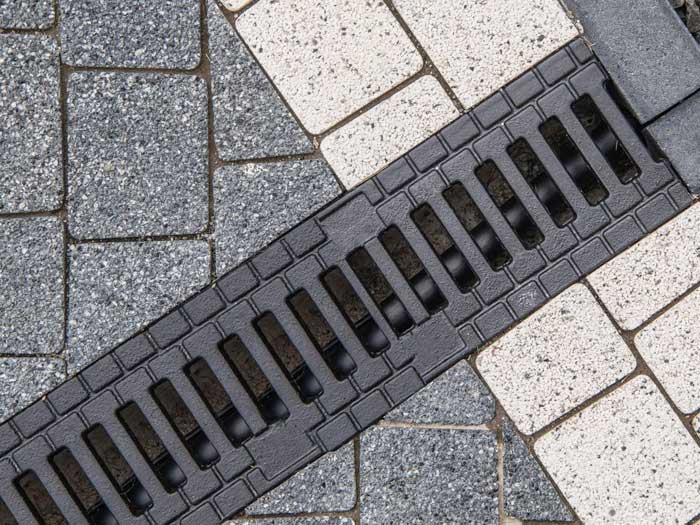
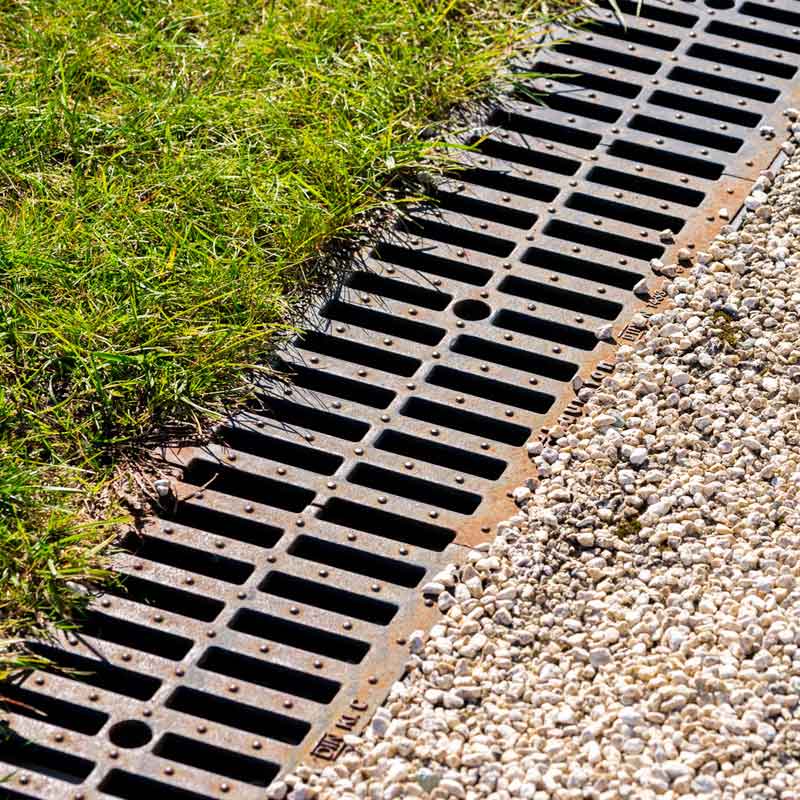
A steel grating trench cover performs two jobs at the same time: it creates a usable surface over an open trench while allowing water, liquids, or process runoff to pass through the grating into the drainage channel below. This combination makes grating covers useful in industrial workshops, water treatment facilities, parking areas, public infrastructure, equipment zones, and other environments where drainage and surface access must work together.
Choosing a suitable cover involves much more than matching the width of a trench. Bearing bar direction, clear span, expected loads, opening dimensions, frame support, drainage capacity, surface conditions, corrosion exposure, panel handling, and installation details can all affect performance.
A well-designed system therefore treats the cover, supporting frame, trench, and surrounding surface as connected components. The following seven factors explain what should be evaluated before a trench grating configuration is finalized.
What Is a Steel Grating Trench Cover?
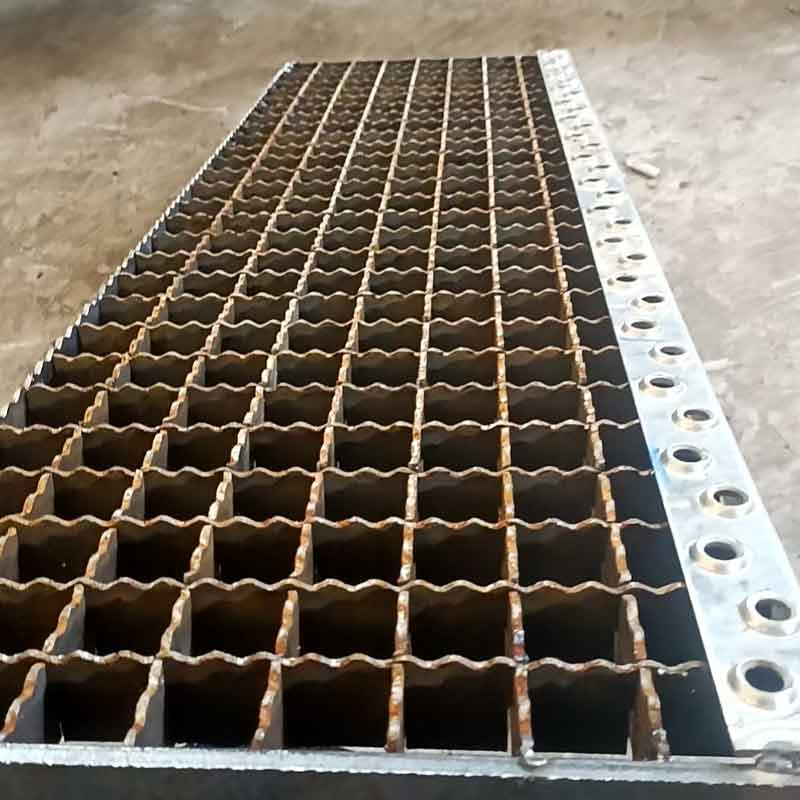
A steel grating trench cover is an open-grid panel positioned across a drainage trench, channel, service opening, or similar recessed structure. Parallel bearing bars normally span between supporting edges or frames, while cross bars maintain the grid configuration and stabilize the panel.
Unlike a solid cover, the open structure allows water to enter the channel directly through the surface. This can make grating particularly useful where rapid drainage, ventilation, visual inspection, or easy access to the trench is required.
The principle is closely related to a trench drain, where a long channel collects surface water and commonly uses a cover or grating positioned flush with the surrounding surface. The cover therefore forms an important interface between the drainage channel and the traffic area above it.
The correct configuration depends on both sides of that interface: what moves across the cover and what needs to pass through it.
Factor 1: Determine the Actual Trench Span
One of the first dimensions to establish is the clear unsupported span.
This is not always identical to the visible trench width. The grating normally rests on a frame, ledge, angle, or structural support along each side of the opening, so the effective bearing arrangement must be identified accurately.
The bearing bars should span between these supporting edges.
As the unsupported span becomes wider, bending and deflection generally become more significant under the same load. A panel configuration suitable for a narrow drainage channel may therefore not provide the same performance across a substantially wider opening.
Important measurements include:
| Dimension | Why It Matters |
|---|---|
| Clear trench opening | Defines the area that must be bridged |
| Support width | Determines available bearing area |
| Overall panel width | Ensures sufficient coverage and seating |
| Panel length | Defines each removable section |
| Frame elevation | Helps keep the surface aligned |
| Installation clearance | Allows practical fitting and removal |
Measurements should be taken from the actual supporting surfaces rather than only from the surrounding concrete or visible edge.
Factor 2: Match the Cover to the Expected Load
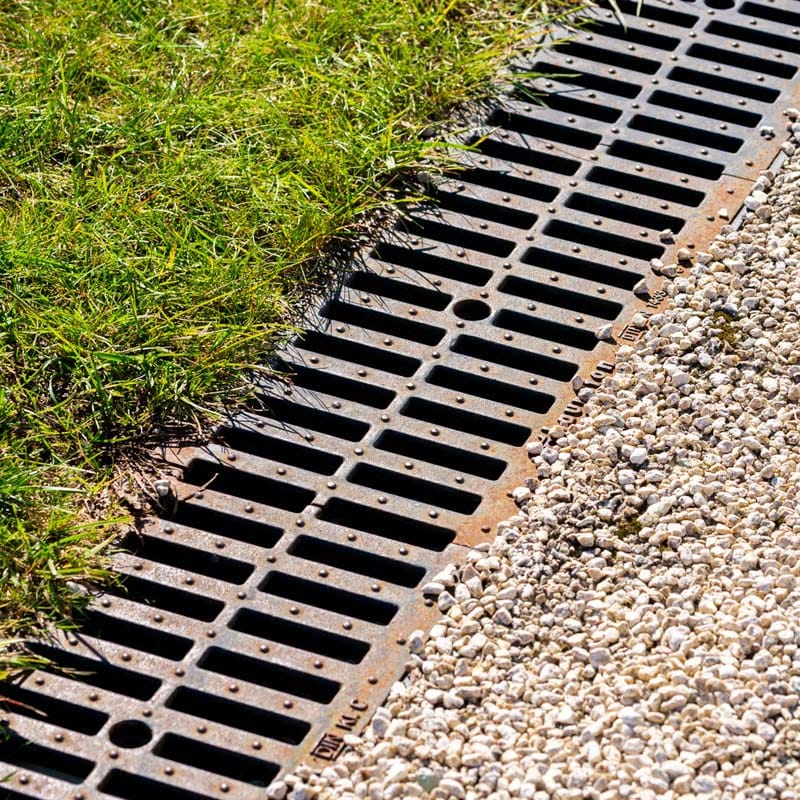
A drainage cover in a pedestrian walkway experiences very different loading from one positioned across a service road or equipment route.
The type of traffic should therefore be defined before bearing bar dimensions and spacing are selected.
Typical loading conditions can include:
- Pedestrian traffic
- Maintenance carts
- Industrial equipment
- Fixed machinery near the trench
- Service vehicles
- Repeated wheel traffic
- Concentrated loads near panel edges
A uniformly distributed load acts differently from a wheel or equipment foot concentrated over a small contact area.
This distinction matters because a wheel may initially transfer much of its force to only a few bearing bars. Wheel width, wheel position, travel direction, and the relationship between the wheel path and bearing bar spacing can therefore influence the structural demand.
For areas carrying moving equipment, the complete route should be considered rather than checking only one stationary loading position.
Factor 3: Select Bearing Bars for Span and Traffic Conditions
Bearing bars form the primary load-carrying structure of the trench cover.
Their depth, thickness, spacing, material, and unsupported span work together to determine structural behavior. Increasing one dimension without reviewing the other variables does not provide a complete basis for selection.
A deeper bearing bar will generally provide greater resistance to bending than a shallower bar with similar thickness, while closer spacing places more bearing bars beneath a given surface width.
The appropriate configuration should therefore reflect:
- Clear span
- Expected load type
- Wheel contact area
- Traffic frequency
- Required opening size
- Deflection requirements
- Material conditions
Technical information covering trench covers, bearing bar configurations, material options, and industrial applications can be reviewed within broader steel grating technical requirements when developing a project specification.
The objective is to match the bearing structure to the application rather than selecting dimensions independently.
Factor 4: Balance Drainage With Opening Size
The open-grid structure is one of the main reasons steel grating works effectively over drainage channels.
However, greater open area is not automatically better.
The opening pattern must provide sufficient water passage while remaining appropriate for the traffic above the trench.
Larger openings can increase unobstructed flow, but they may create additional considerations for:
- Narrow wheels
- Footwear
- Small objects
- Debris
- Pedestrian routes
- Bicycle or cart traffic
Smaller openings may provide a more continuous surface but can reduce the amount of open area available for drainage.
The correct configuration depends on how much liquid must pass through the surface and how the cover is used during normal operation.
For industrial drainage, debris conditions are also important. A theoretically large open area may not provide reliable drainage if leaves, process residue, packaging material, sediment, or other debris regularly obstruct the grid.
Drainage design should therefore consider both initial opening area and realistic maintenance conditions.
Factor 5: Design the Supporting Frame Together With the Cover
A strong grating panel still requires stable support.
The frame or supporting ledge around the trench must provide adequate bearing for the ends of the bearing bars and transfer loads into the surrounding structure.
Poor support conditions can create movement, uneven loading, excessive edge stress, or unstable panels.
The existing steel grating trench cover configuration illustrates how open grating can be integrated with trench and drainage applications where load support and liquid passage need to function together.
When designing the supporting arrangement, project teams should review:
- Bearing length at each edge
- Frame stiffness
- Frame alignment
- Surface elevation
- Panel joints
- Adjacent concrete or steelwork
- Local support around openings
- Fixing locations
The frame should also remain sufficiently level so that panels sit firmly without rocking.
If one corner of a cover does not contact the supporting surface correctly, repeated traffic may create movement and impact even when the grating itself has been correctly selected.
Factor 6: Consider Surface Conditions and Slip Risk
Trench covers frequently operate in areas where water is expected, which makes surface conditions especially important.
Plain bearing bars can provide a practical surface in many controlled environments. Serrated bars introduce additional edges along the upper surface and may be considered where water, mud, process residue, or other contaminants increase slip concerns.
However, surface profile is only one part of safe access.
Other factors include:
- Drainage efficiency
- Cleaning frequency
- Contamination
- Footwear
- Lighting
- Panel stability
- Surrounding floor condition
A serrated cover that remains heavily coated with residue can still provide poor footing.
The transition between the surrounding floor and the grating also deserves attention. Covers should generally be positioned so that abrupt level differences do not create an unnecessary obstruction along the traffic route.
Surface configuration, drainage, maintenance, and installation should therefore be considered together.
Factor 7: Match Material Protection to the Environment
Drainage systems regularly expose metal components to water, humidity, sediment, cleaning liquids, and contaminants.
Material and surface protection should therefore match the actual environment.
Carbon steel grating can be combined with an appropriate protective finish for many industrial and outdoor applications. Stainless steel may be considered where the environment creates more demanding corrosion conditions.
Selection should be based on factors such as:
- Indoor or outdoor installation
- Frequency of wetting
- Standing moisture
- Chloride exposure
- Industrial contaminants
- Cleaning procedures
- Temperature
- Maintenance accessibility
Water passing through the grating does not necessarily mean that the panel dries immediately. Moisture and deposits can remain around frames, fasteners, contact areas, or poorly drained corners.
The design should therefore help prevent unnecessary water retention around both the grating and its supports.
Why Bearing Bar Direction Matters
Bearing bars should normally cross the trench from one structural support to the other.
This orientation creates the intended primary load path.
Cross bars run perpendicular to the bearing bars and help maintain panel spacing and stability, but they are not normally intended to replace the bearing bars as the primary spanning members.
A rectangular trench cover may physically fit into an opening when rotated 90 degrees, yet its structural behavior may change substantially.
Installation drawings should therefore identify bearing bar direction clearly.
This is particularly important when several similar panels are installed across a long drainage channel because installers may otherwise assume that orientation is interchangeable.
Panel marks and layout drawings can reduce this risk.
How Panel Length Affects Installation and Maintenance
A long drainage trench does not necessarily need one continuous grating panel.
Dividing the channel into manageable sections can simplify installation, inspection, cleaning, and future access.
Panel length should consider:
- Manual handling
- Available lifting equipment
- Trench access
- Maintenance frequency
- Frame locations
- Structural support points
- Nearby machinery
- Required removable sections
Panels that are unnecessarily large may become difficult to remove when the trench needs cleaning.
At the opposite extreme, an excessive number of small panels creates more joints and fixing locations.
The best layout balances structural support with practical handling and maintenance.
Drainage Flow and Grating Orientation
Water reaching a trench cover may approach from several directions depending on floor slope and site layout.
The grid itself should provide enough open area for the expected surface flow, while the underlying channel needs sufficient capacity to move collected water away.
The cover cannot compensate for a poorly configured trench.
If the channel below has inadequate slope, limited outlet capacity, or accumulated sediment, surface drainage may still become ineffective even when the grating remains open.
The complete drainage path should therefore be reviewed:
surface → grating → trench → outlet.
Keeping each stage clear helps reduce water accumulation around the installation.
Pedestrian Areas Require Different Considerations
Where a trench crosses a pedestrian route, structural capacity remains important, but surface usability becomes a greater consideration.
Opening dimensions should be appropriate for the type of access, while panels should remain stable and aligned with the surrounding floor.
Potential concerns include:
- Heel or footwear interaction
- Uneven panel edges
- Rocking panels
- Slippery contamination
- Excessive gaps between panels
- Loose fixings
Areas shared by pedestrians and small-wheeled carts require further attention because an opening arrangement comfortable for normal walking may behave differently under narrow wheels.
The real users of the surface should therefore be identified during selection.
Vehicle and Equipment Crossing Areas
Vehicle crossings create more demanding localized loads.
Wheel force is applied over a relatively small area and moves across the panel, which can expose different bearing bars to repeated loading.
Important information includes:
| Vehicle Information | Design Relevance |
|---|---|
| Individual wheel load | Defines concentrated demand |
| Wheel width | Influences load distribution |
| Wheel diameter | Affects contact behavior |
| Axle arrangement | Determines wheel positions |
| Travel direction | Defines repeated load path |
| Traffic frequency | Indicates repeated use |
| Turning location | May create additional local forces |
The trench frame and surrounding structure should be considered together with the grating because the load must eventually transfer beyond the panel.
Panel joints should also be coordinated with expected wheel routes wherever practical.
Industrial Workshop Applications
Industrial workshops can contain a mixture of pedestrian movement, carts, machinery, fluids, debris, and frequent cleaning.
A trench cover in this environment must therefore satisfy several functional requirements simultaneously.
Drainage should remain effective when process water or cleaning liquid reaches the channel. At the same time, the cover must provide a stable surface for normal traffic.
Where machinery is located close to the trench, concentrated loads should be checked carefully. Equipment feet should not unintentionally transfer major structural forces into unsupported panel edges.
Removable sections can also improve access when drainage channels require periodic cleaning.
Water Treatment and Process Areas
Water treatment facilities and wet-process environments place particular emphasis on drainage and corrosion conditions.
Grating allows water to pass through while maintaining access over channels and trenches, but material protection, surface condition, and maintenance become important.
Sediment and process residue may gradually reduce open area if the panels are not cleaned.
Chemical exposure should also be identified rather than assuming all wet environments are equivalent.
The material system should reflect the actual substances present, their concentration, operating temperature, and frequency of exposure.
Should a Trench Cover Be Removable?
Many drainage covers benefit from remaining removable so that the channel underneath can be inspected and cleaned.
Whether removal is required depends on:
- Maintenance method
- Channel depth
- Sediment accumulation
- Access to outlets
- Utility lines within the trench
- Inspection frequency
Removable panels should still remain secure during normal operation.
Mechanical fixing methods can help control movement while allowing future access when required.
Panel size should also support practical removal. A technically removable panel is not particularly useful if its dimensions or weight make routine access unnecessarily difficult.
Maintenance requirements should therefore influence the layout from the beginning.
Fixing and Panel Stability
A trench cover should remain seated correctly during normal use.
Movement can result from pedestrian traffic, wheel loads, vibration, water flow, maintenance activity, or uneven support conditions.
Suitable clips or other attachment methods may help keep panels aligned and reduce unwanted movement.
Fixing points should be positioned so that they work with the supporting frame rather than relying on weak or inaccessible areas.
The correct approach depends on whether the cover is permanent or removable.
Maintenance personnel should also be able to identify and access the fixing system without damaging the panel or surrounding structure.
Common Selection Mistakes
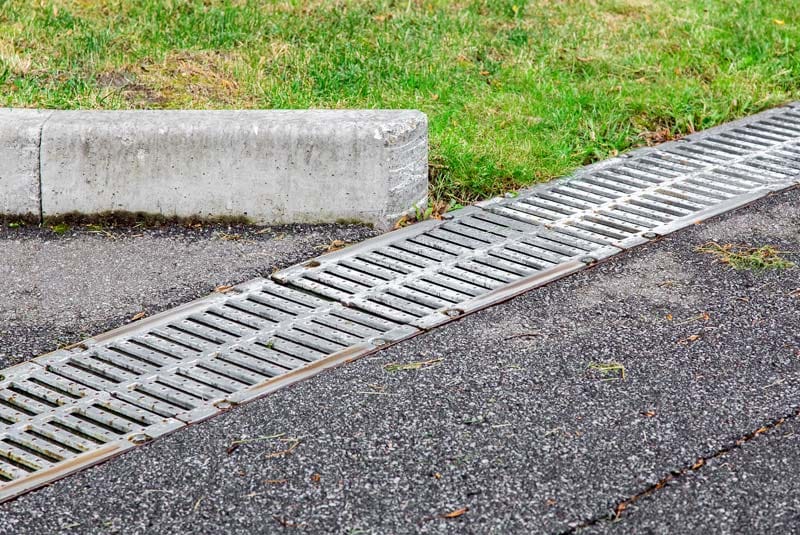
Several recurring mistakes can reduce the effectiveness of a trench grating system.
One is selecting the panel only from trench width. This overlooks bearing bar dimensions, actual clear span, support width, loading conditions, and opening requirements.
Another is concentrating solely on drainage area while ignoring the traffic above the cover.
Other common issues include:
- Incorrect bearing bar direction
- Insufficient edge support
- Unstable frames
- Excessive panel gaps
- Ignoring individual wheel loads
- Poor coordination with surrounding floor elevation
- Panels that are difficult to remove
- Inadequate drainage beneath the grating
- Field cutting without reviewing structural support
- Allowing debris to obstruct the openings
Most of these problems can be reduced by coordinating the trench, frame, grating, traffic conditions, and maintenance strategy before installation.
Information Needed Before Selecting a Trench Cover
A useful technical review should begin with accurate site and application information.
| Project Information | Purpose |
|---|---|
| Clear trench width | Defines the structural span |
| Overall channel dimensions | Coordinates cover layout |
| Support detail | Establishes bearing conditions |
| Traffic type | Defines operating demand |
| Wheel information | Identifies concentrated loads |
| Drainage requirement | Influences open-area selection |
| Environment | Guides material protection |
| Surface condition | Helps determine surface configuration |
| Panel length | Influences handling and maintenance |
| Bearing bar direction | Establishes the primary load path |
| Fixing requirements | Helps maintain panel stability |
| Drawings | Coordinates the complete installation |
Providing this information early allows the cover configuration to be developed around the real application rather than adjusted after the drainage structure has already been completed.
Conclusion
A steel grating trench cover is more than a panel placed across a drainage opening. Its performance depends on the relationship between bearing bars, clear span, traffic loads, opening dimensions, supporting frame, surface conditions, material protection, drainage flow, and installation details.
The most effective selection process begins with the trench and its operating environment. The clear opening and structural supports should be established first, followed by loading conditions, bearing bar configuration, drainage requirements, panel layout, and maintenance access.
When the trench, frame, cover, and surrounding surface are designed as one system, the installation can provide reliable drainage while maintaining stable access for the people or equipment using the area above it.
FAQ
What is a steel grating trench cover used for?
A steel grating trench cover is used over drainage channels, service trenches, industrial floor openings, workshop drains, water treatment channels, and similar structures where a load-bearing surface must allow liquids to pass through.
How should the size of a trench grating cover be determined?
The cover should be based on the clear trench span, available support width, overall frame dimensions, panel seating requirements, installation clearance, and practical panel length rather than the visible trench opening alone.
Why is bearing bar direction important on a trench cover?
Bearing bars are the primary structural members and should normally span between the two supporting sides of the trench. Installing the panel in the wrong orientation can change how loads are transferred through the cover.
Can a trench cover be used where vehicles cross a drainage channel?
A grating system can be configured for vehicle-crossing applications when individual wheel loads, contact area, span, bearing bars, support framing, traffic direction, and surrounding structural conditions are properly evaluated.
Should trench grating covers be removable?
Removable panels can be useful where drainage channels require inspection, cleaning, or access to services below. Panel dimensions, fixing methods, structural support, and maintenance requirements should be coordinated so the cover remains stable during normal operation while allowing practical access when needed.