Table of Contents
Introduction
Steel grating installation has a direct influence on how an industrial platform, walkway, equipment access area, stair system, or drainage structure performs after fabrication. Even when the grating itself has been selected correctly, problems can still develop if bearing bars run in the wrong direction, panel edges are inadequately supported, clearances are inconsistent, or fixings allow movement during service.
Installation should therefore be treated as part of the grating design rather than as a separate activity completed only after panels reach the site. Structural supports, panel dimensions, bearing bar direction, openings, fixing locations, removable sections, and surrounding equipment should ideally be coordinated before fabrication begins.
The following nine steps explain the main factors that should be reviewed to create a stable, well-aligned, and maintainable grating installation.
Step 1: Confirm the Supporting Structure
The first stage of steel grating installation is to verify the structure that will support the panels.
Grating typically rests on beams, angles, frames, channels, or other structural members. These supports must provide stable seating for the ends of the bearing bars and transfer loads into the surrounding structure.
Before placing the panels, installers should confirm that support locations correspond with the approved drawings. The spacing between beams should also match the span used when the grating configuration was selected.
Support surfaces should be reasonably level. Significant differences in elevation can cause panels to rock or create uneven transitions between adjacent sections.
Important conditions to review include support spacing, bearing width, surface level, structural alignment, panel boundaries, equipment openings, and the location of removable sections.
A suitable panel cannot compensate for an incorrectly positioned or unstable supporting structure.
Step 2: Identify the Bearing Bar Direction
Bearing bar direction is one of the most important installation details.
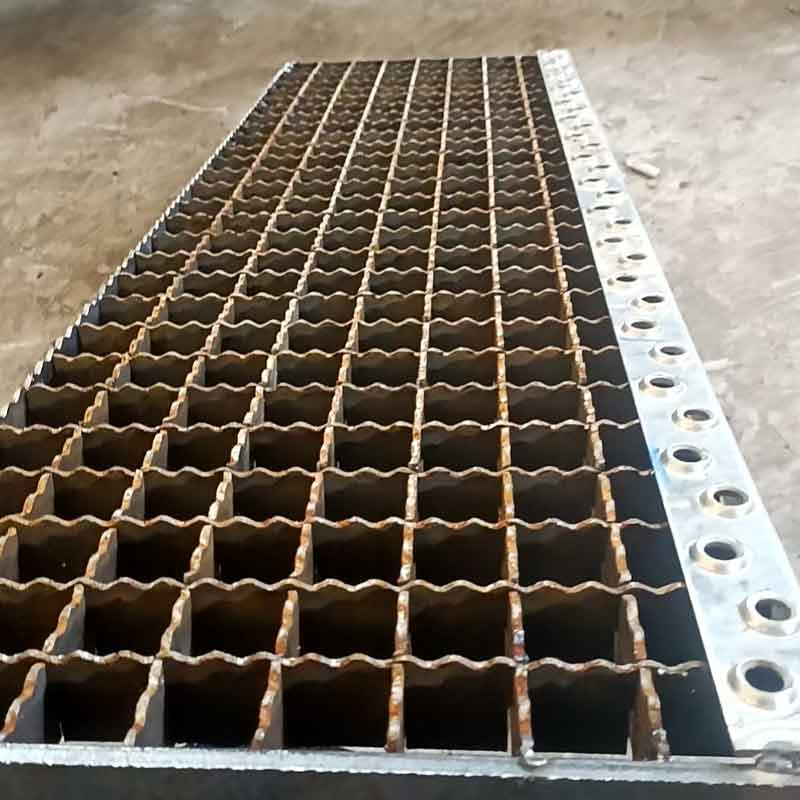
In most bar grating systems, the parallel bearing bars act as the primary structural members. They should normally span directly between the supporting beams or frames.
Cross bars run perpendicular to the bearing bars. Their role is mainly to maintain spacing, stabilize the grid, and assist with localized load distribution.
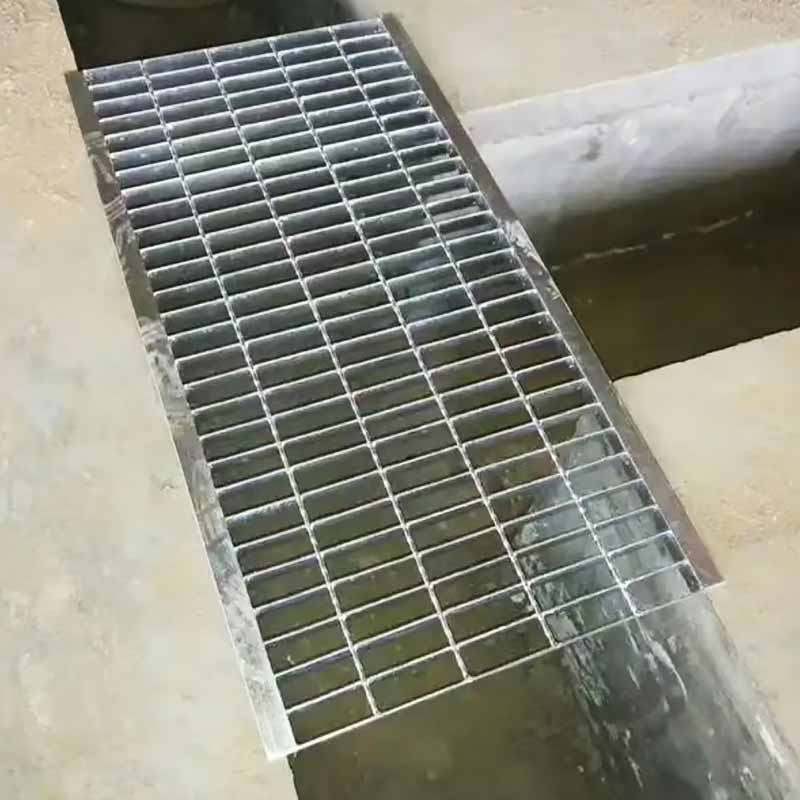
The basic grating structure consists of regularly spaced elongated elements, often arranged in perpendicular directions. In an industrial panel, however, installers must distinguish clearly between the members carrying the primary span and those stabilizing the grid.
A rectangular panel may physically fit into an opening when rotated, but its structural behavior can change significantly if the bearing bars no longer span between the intended supports.
For this reason, fabrication drawings and panel marks should identify bearing bar direction clearly before installation begins.
Step 3: Check Panel Dimensions Before Placement
Panels should be checked against the installation drawings before they are permanently positioned.
Overall length and width need to correspond with the structural opening, but dimensional review should also include the relationship between the panel and surrounding beams, walls, equipment, columns, or frames.
Panels generally require practical installation clearance. If they fit too tightly, minor differences in structural alignment can make placement difficult. Excessive gaps, however, can create undesirable openings between adjacent panels or surrounding structures.
Before installation, verify:
- Panel length and width
- Bearing bar direction
- Panel identification marks
- Cutout positions
- Edge banding
- Support locations
- Removable sections
- Joint positions
Checking these details before fixing reduces the likelihood of unnecessary field modification.
Step 4: Position Panels With Adequate Bearing
The ends of the bearing bars need sufficient contact with the supporting structure.
If a panel is positioned with inadequate bearing along one edge, loads may not transfer into the supporting beam as intended.
The required seating arrangement should be defined during engineering and fabrication planning. Installers should confirm that panels are centered correctly over their supports rather than assuming that the visible platform edge determines the correct position.
Adjacent panels should also align consistently.
Where a large industrial floor is divided into multiple panels, small positioning errors can accumulate across the platform. Establishing reference lines early can help maintain consistent joints and panel alignment.
The installation sequence should therefore follow the panel layout rather than placing individual pieces without considering the overall floor system.
Step 5: Coordinate Cutouts and Openings
Industrial grating frequently needs to fit around pipes, columns, valves, machinery, cable routes, or structural members.
These openings should ideally be incorporated during fabrication rather than created unpredictably during installation.
Cutting a panel can interrupt one or more bearing bars. Depending on the size and position of the opening, this can change how loads are transferred through the surrounding grating.
Larger cutouts may require:
- Banded edges
- Additional structural framing
- Revised panel divisions
- Local support members
- Removable access sections
Detailed information on panel dimensions, bearing bars, custom fabrication, and edge reinforcement should be coordinated with the wider steel grating specification requirements before installation starts.
Field modifications should not be assumed to be structurally equivalent to the original fabricated panel.
Step 6: Select an Appropriate Fixing Method
Grating panels should remain stable during normal operation.
Depending on the application, fixing methods can include mechanical clips, fasteners, or suitable welded attachment to the supporting structure.
The appropriate method depends on several conditions.
A maintenance platform may require panels to remain removable for access to equipment below. In this situation, mechanical fixing can allow later removal while still limiting movement during normal use.
Other installations may use more permanent attachment where future removal is not required and the project specification allows it.
The fixing system should consider vibration, pedestrian movement, wheeled traffic, environmental exposure, access for inspection, and the supporting steel configuration.
Fixings should prevent unwanted movement without creating unnecessary difficulty during future maintenance.
Step 7: Keep Panel Joints Consistent
Panel joints are an important but sometimes overlooked part of steel grating installation.
Large platforms, long walkways, and drainage structures usually require multiple panels. The joints between them should remain reasonably consistent so that the finished surface is stable and visually coordinated.
Uneven joints can create problems for pedestrians, carts, maintenance equipment, or removable access panels.
Joint layout should also consider the supporting structure beneath the grating. Panel edges should not be left unsupported simply because they align conveniently with another panel.
Where possible, panel divisions should correspond with beams or other appropriate support locations.
This is particularly important in areas where concentrated loads or wheeled traffic cross from one panel to another.
Step 8: Review Platform and Walkway Transitions
Steel grating rarely exists completely independently from surrounding surfaces.
It may connect to solid flooring, stairs, equipment bases, ladders, concrete slabs, or other grating sections.
These transitions should be checked during installation to make sure there are no unexpected level differences, unstable edges, or poorly supported interfaces.
For industrial access structures, the selected platform steel grating should work together with support beams, panel layout, equipment openings, and adjacent walking surfaces rather than being treated as a separate component.
Stair landings and walkway transitions deserve particular attention because they experience repeated pedestrian movement.
A consistent surface helps improve usability and reduces the likelihood of panels shifting under repeated traffic.
Step 9: Inspect the Completed Installation
Installation should finish with a systematic inspection rather than ending immediately after the last panel is fixed.
Inspectors should review panel orientation, support contact, joint consistency, fixings, cutouts, removable areas, and the general stability of the walking surface.
Each panel should sit firmly without obvious rocking.
Fixings should be installed in the intended positions and remain accessible where future inspection is required.
Cutouts should be checked to confirm that exposed panel edges are properly finished and adequately supported.
Where the grating is part of a drainage area, water pathways should also remain unobstructed.
A final inspection helps identify installation issues before the platform or walkway enters normal service.
Why Support Alignment Matters
Support alignment affects how loads enter the structural system.
If one support is significantly higher than another, part of the grating may carry load differently from the intended configuration. A rocking panel can also experience repeated impact as pedestrians or equipment move across it.
This does not necessarily mean every surface must be perfectly dimensionless or visually identical, but the installed arrangement should provide stable and predictable seating.
Supporting beams should also remain consistent with the bearing bar direction established in the design.
Installation teams should avoid changing the structural orientation simply because another panel position appears easier during field assembly.
Mechanical Clips or Welded Fixing?
Both mechanical and permanent fixing approaches can be appropriate depending on the project.
Mechanical clips are useful where panels need to remain removable. They can allow access to equipment, drainage channels, utilities, or structural areas below the grating.
More permanent attachment may be appropriate where panel removal is not expected and the structural specification allows it.
The decision should consider:
| Installation Condition | Main Consideration |
|---|---|
| Removable maintenance panels | Future access |
| High-vibration areas | Panel stability |
| Outdoor environments | Exposure and inspection |
| Equipment platforms | Maintenance requirements |
| Long walkways | Repeated pedestrian movement |
| Drainage areas | Cleaning access |
| Structural platforms | Support and load transfer |
The fixing system should be selected to match the operating environment rather than applied identically to every project.
Installing Grating Around Machinery
Equipment platforms often create some of the most complex installation conditions.
Machinery bases, pipes, cables, valves, and support legs can interrupt regular panel layouts. Grating should be divided in a way that provides practical access while maintaining suitable structural support.
Where heavy machinery is present, equipment loads should preferably transfer into the primary supporting structure rather than relying unexpectedly on nearby panel edges.
Removable panels may be useful around equipment requiring periodic inspection.
Panel identification is especially valuable in these areas because custom-shaped pieces may fit only one location and orientation.
A clear installation drawing can significantly reduce confusion when several irregular panels are positioned around the same machine.
Steel Grating Installation for Walkways
Walkways require stable panel alignment because users repeatedly move across panel joints.
Bearing bars should span between the intended supports, while panel divisions should avoid creating unsupported edges along the walking route.
Where small carts or maintenance equipment are used, joint consistency and opening dimensions become more important.
Outdoor walkways may also require attention to drainage and surface contamination.
The grating should allow water to pass through while the surrounding structure directs it away from the access route.
Loose debris should not be allowed to accumulate around supports or fixings where it can interfere with inspection.
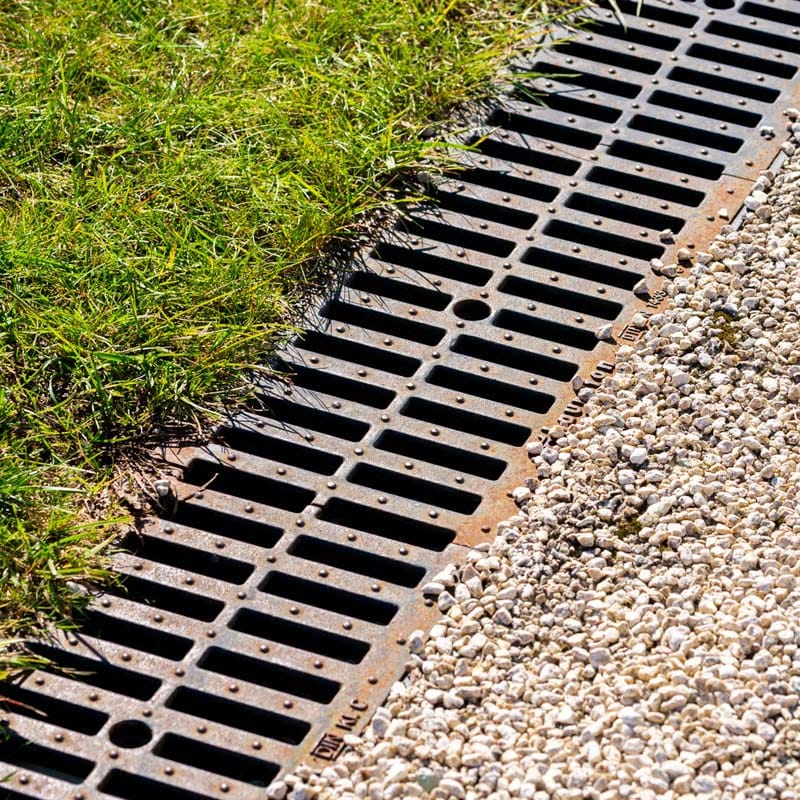
Steel Grating Installation for Drainage Areas
Drainage covers and floor grating require additional attention to frame alignment.
Panels should sit securely on the surrounding support so that pedestrian or equipment traffic does not cause rocking.
The installation should preserve sufficient open area for water passage.
Fixings should not unnecessarily obstruct drainage or make routine cleaning difficult.
Where panels need to be removed for trench inspection, their dimensions and fixing method should allow practical access.
The surrounding frame, rather than only the grating panel, should also be inspected because corrosion, deformation, or movement in the support can affect long-term stability.
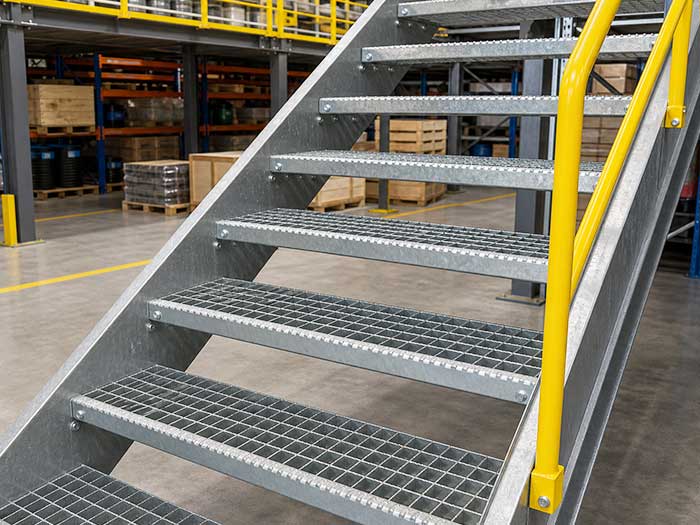
Steel Grating Installation for Stair Systems
Stair treads experience repeated concentrated foot traffic.
Each tread should therefore be securely supported and fixed according to the structural arrangement.
The front edge of the tread deserves particular attention because users repeatedly apply force in this area.
Tread alignment should remain consistent across the stair system so that changes in level or position do not create unexpected walking conditions.
Where serrated surfaces are used, installers should also confirm that the intended walking surface is oriented correctly.
Stairs exposed to outdoor conditions should maintain effective drainage so that water does not accumulate around supports or connections.
Why Field Cutting Should Be Controlled
Field cutting may sometimes be necessary when site conditions differ from drawings, but it should be approached carefully.
Removing bearing bars can alter the structural behavior of the panel.
Cut edges may also require banding or other treatment to restore stability around the opening.
Unplanned cutting can create several problems:
- Unsupported bearing bars
- Weak panel edges
- Poor fit around equipment
- Loss of protective surface treatment
- Irregular gaps
- Difficult future replacement
Whenever possible, significant changes should be reviewed before modification rather than made only to achieve immediate physical fit.
Accurate site measurements before fabrication can reduce the need for this type of adjustment.
Installation Clearance and Expansion Considerations
Grating panels need enough clearance to be positioned and removed where necessary.
A panel installed tightly between rigid structural elements may become difficult to remove if the surrounding structure varies slightly from the drawing.
Temperature changes, fabrication tolerances, coating thickness, and structural erection tolerances can also influence fit.
At the same time, excessive clearance should be avoided because large gaps can affect walking conditions and panel stability.
The correct allowance depends on the panel dimensions, support system, environment, and fabrication requirements.
Clearance should therefore be defined deliberately rather than created accidentally during installation.
Protecting Surface Treatments During Installation
Grating may be installed with galvanizing, paint, or another specified protective finish.
Handling and field modification can damage these surfaces.
Dragging panels across structural steel, uncontrolled cutting, or unnecessary impact may expose the base material or damage the finish around edges and connections.
Installation teams should therefore handle panels in a way that protects the intended surface condition.
Areas affected during field work should be reviewed according to the project’s protective-treatment requirements.
Surface condition is especially important in outdoor or moisture-prone environments where exposed steel may experience more aggressive corrosion conditions.
Common Steel Grating Installation Mistakes
Several installation problems appear repeatedly across industrial projects.
One of the most serious is placing the panel with bearing bars running in the wrong direction.
Other common issues include insufficient support at panel edges, inconsistent joints, unsecured panels, poorly planned cutouts, unstable frames, excessive gaps, damaged finishes, and fixing systems that prevent required maintenance access.
Another mistake is assuming that a panel that physically fits is automatically installed correctly.
A correct installation must satisfy both dimensional and structural requirements.
The panel should fit the opening while also maintaining the intended load path, support condition, stability, and access requirements.
Steel Grating Installation Checklist
Before the installation is accepted, the following points should be reviewed:
| Inspection Item | What to Confirm |
|---|---|
| Bearing bar direction | Bars span between intended supports |
| Support contact | Panel edges sit firmly on supports |
| Panel dimensions | Layout corresponds with drawings |
| Joints | Spacing remains consistent |
| Fixings | Panels are securely attached |
| Cutouts | Edges are finished and supported |
| Surface | No significant installation damage |
| Removable panels | Access remains practical |
| Drainage | Openings and channels remain clear |
| Alignment | Adjacent panels form a stable surface |
| Equipment interfaces | Panels fit correctly around machinery |
| Stairs and transitions | Walking surfaces remain consistent |
A documented inspection can also provide a useful reference for later maintenance.
Post-Installation Inspection and Maintenance
Steel grating installation should not be considered permanently complete after initial acceptance.
Industrial environments can change over time.
Vibration, repeated traffic, equipment movement, structural settlement, corrosion, and maintenance activity may affect panels and fixings.
Periodic inspection should therefore review:
- Loose or missing fixings
- Panel movement
- Structural deformation
- Damaged edges
- Corrosion
- Blocked drainage
- Accumulated debris
- Changes around machinery
- Damaged supporting steel
Removable panels should also be returned to their correct position and orientation after maintenance work.
Regular inspection helps ensure that the installed system continues to operate as originally intended.
Conclusion
Steel grating installation affects the stability, alignment, structural load path, and long-term usability of industrial platforms, walkways, drainage systems, equipment areas, and stairs.
A reliable installation begins by confirming the supporting structure and identifying the correct bearing bar direction. Panel dimensions, support contact, clearances, cutouts, joints, fixings, surface protection, and removable sections should then be coordinated with the project drawings.
Installation quality cannot compensate for an unsuitable grating specification, just as a correctly selected panel cannot compensate for inadequate support or poor placement.
When design, fabrication, structural support, and installation are considered as one connected process, the finished grating system is more likely to remain stable, accessible, and suitable for long-term industrial service.
FAQ
What is the correct direction for steel grating installation?
The bearing bars should normally span directly between the structural supports because they are the primary load-carrying members. Cross bars generally run perpendicular to the bearing bars and maintain the grid structure.
Should steel grating be fixed to the supporting structure?
Grating panels normally require an appropriate fixing method to prevent unwanted movement, uplift, or displacement. The specific method depends on the structure, vibration, traffic, maintenance needs, and whether panels must remain removable.
Can steel grating be cut during installation?
Field cutting may sometimes be necessary, but removing bearing bars can affect panel support and structural behavior. Significant openings should ideally be incorporated during fabrication or reviewed before modification.
How much support does steel grating need at the edges?
The required bearing arrangement depends on the panel configuration, load conditions, supporting structure, and project specification. Panels should provide stable contact with the intended supports rather than relying on narrow or inconsistent edge seating.
How should installed steel grating be maintained?
Periodic inspection should check fixings, panel movement, supports, corrosion, drainage, cutouts, debris, and any changes around machinery. Removable panels should also be returned to the correct location and orientation after maintenance.