Table of Contents
Introduction
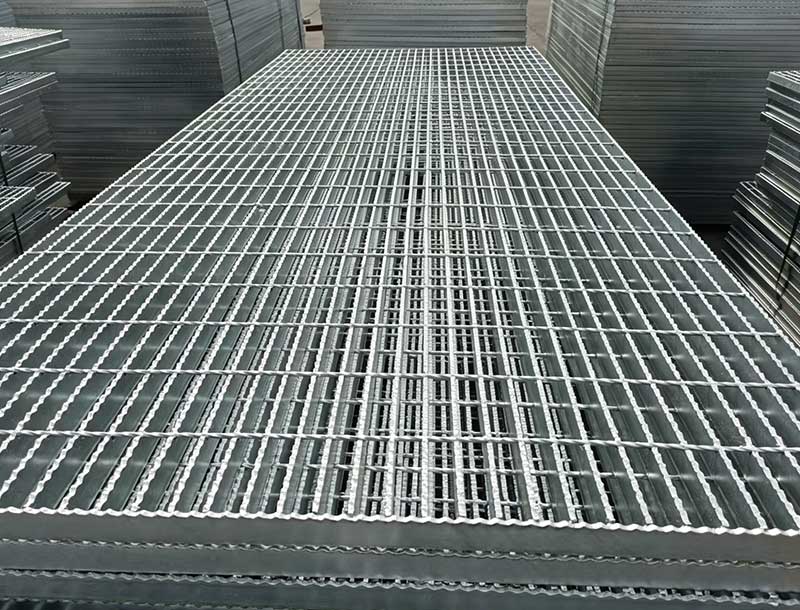
Serrated steel grating is commonly considered for industrial environments where walking surfaces may be exposed to water, oil, mud, dust, process residue, or other conditions that can reduce traction. By adding tooth-like edges to the upper surface of the bearing bars, the grating can provide more surface interaction than a plain bar configuration.
However, serrations alone do not determine whether a grating system is suitable for an application. Structural load, bearing bar dimensions, spacing, support span, drainage, contamination, material protection, installation quality, and maintenance all remain important.
For this reason, serrated steel grating should be selected as part of a complete access or flooring system rather than treated as a universal solution for every slippery environment.
What Is Serrated Steel Grating?
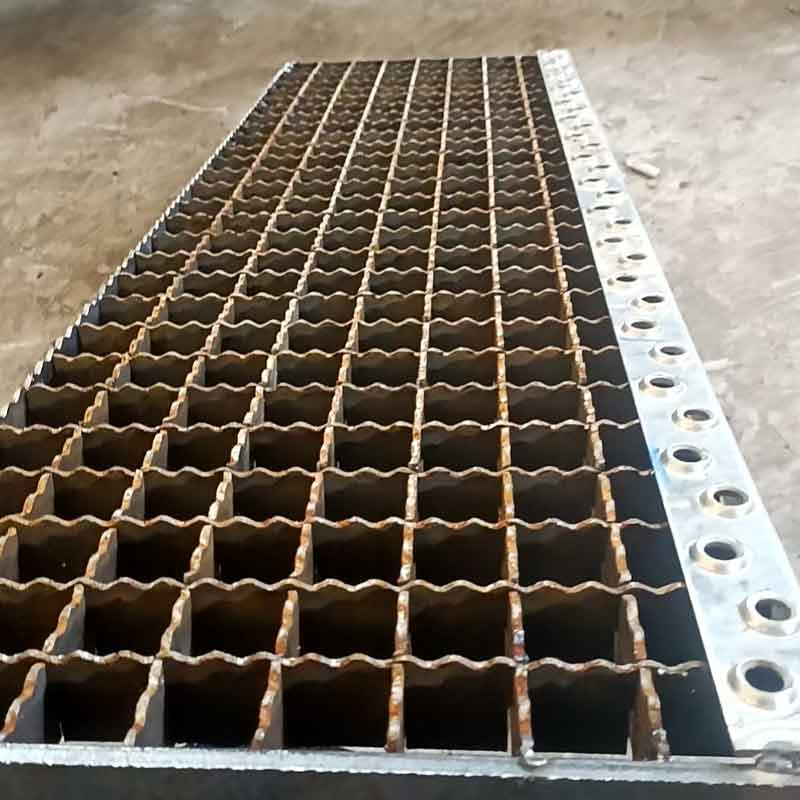
Serrated steel grating is an open-grid structural panel in which the upper edges of the bearing bars include regularly formed notches or tooth-like profiles.
The main structural principle remains the same as other bar grating systems. Parallel bearing bars span between supports and carry the primary load, while cross bars maintain spacing and stabilize the grid.
The difference lies mainly in the upper surface.
A plain bearing bar presents a relatively flat edge, while a serrated bearing bar creates additional contact edges. These surface features can help increase traction in environments where moisture or contamination affects walking conditions.
This makes serrated grating especially relevant to industrial platforms, walkways, stair systems, maintenance areas, outdoor structures, and process facilities where slip conditions deserve additional attention.
How Serrated Steel Grating Improves Surface Traction
Traction depends on the interaction between footwear and the walking surface.
When the upper edge of a bearing bar is serrated, the added teeth create more pronounced contact points. These edges can help improve grip compared with a smooth upper surface under certain operating conditions.
The effect can be particularly useful where surfaces may be exposed to:
- Water
- Oil
- Fine dust
- Mud
- Process residue
- Cleaning liquids
- Outdoor moisture
The broader principle behind slip-resistant grating is to modify the walking surface so that footwear has more opportunity to maintain grip.
However, surface geometry should not be considered independently from maintenance and contamination.
A heavily coated surface can still become slippery even when serrations are present.
Serrated vs. Plain Steel Grating
The main difference between serrated and plain grating is the profile of the bearing bar surface.
| Feature | Serrated Grating | Plain Grating |
|---|---|---|
| Upper Surface | Notched or toothed | Relatively flat |
| Traction | Increased surface interaction | Suitable for many controlled areas |
| Wet Areas | Often considered | Application-dependent |
| Oily Environments | Often considered | Requires closer evaluation |
| Structural Role | Bearing bars carry load | Bearing bars carry load |
| Drainage | Open-grid drainage | Open-grid drainage |
| Typical Use | Industrial access, wet areas, stairs | Platforms, floors, walkways |
It is important to understand that serrations mainly influence surface interaction.
They do not automatically make the grating stronger.
Structural capacity still depends on bearing bar dimensions, spacing, clear span, material, support conditions, and load type.
Where Serrated Steel Grating Is Commonly Used
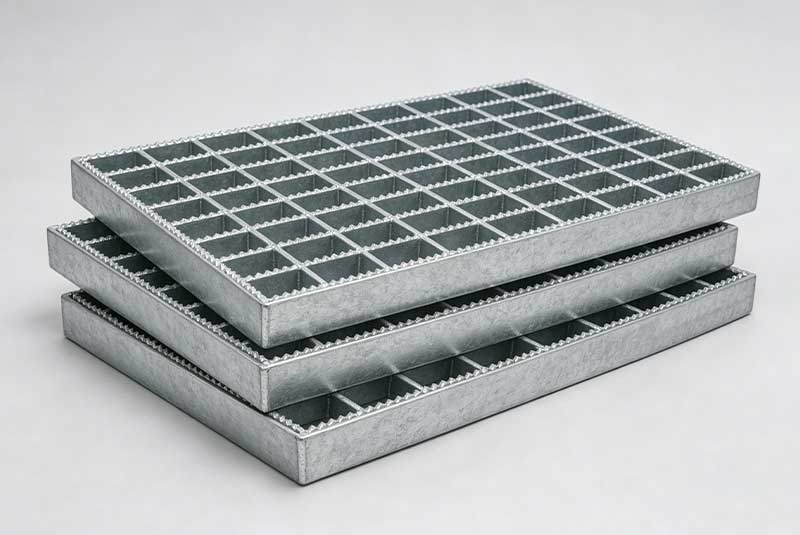
Serrated grating is most useful where environmental conditions create a greater likelihood of reduced surface grip.
Industrial Walkways
Industrial walkways may be exposed to process dust, water, lubricants, or cleaning liquids. Serrated grating can provide an additional surface feature in locations where walking conditions are less predictable.
Outdoor Platforms
Rain, condensation, temperature changes, and outdoor contamination can make platform surfaces more demanding than indoor areas.
A serrated surface may be useful where these conditions occur frequently.
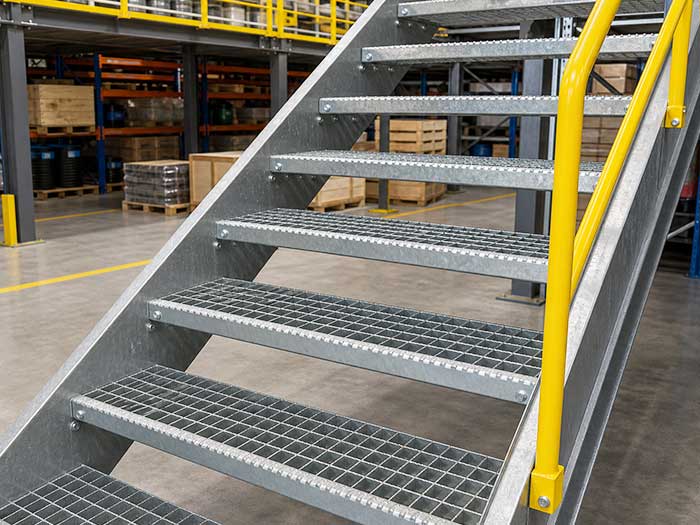
Stair Systems
Stair treads deserve particular attention because users place concentrated foot pressure near the front edge of each tread.
Serrated grating may help improve surface interaction where stairs are exposed to water or industrial contamination.
Oil and Process Facilities
Oil, lubricants, and process residue can significantly reduce friction.
In these locations, serrated grating may be one component of a broader access-safety strategy.
High-Humidity Areas
Areas with frequent condensation or high ambient moisture may remain damp for long periods.
The selected grating should therefore balance traction, drainage, material protection, and maintenance.
These application directions are consistent with Senfa’s current steel grating technical requirements, which position serrated configurations for wet, oily, and higher-safety-demand industrial environments.
Why Serrations Do Not Replace Structural Design
A serrated surface does not change the basic structural role of the grating.
Bearing bars still carry the primary load between supports.
This means the grating must still be selected according to:
- Bearing bar depth
- Bearing bar thickness
- Bar spacing
- Clear support span
- Material
- Load type
- Support conditions
- Deflection requirements
A serrated panel with insufficient bearing bar dimensions can still be structurally unsuitable.
Likewise, a structurally adequate panel may not provide acceptable service if it is installed over an excessive unsupported span.
Surface performance and structural performance should therefore be reviewed separately and then combined into one final specification.
Bearing Bar Dimensions Still Matter
Bearing bar dimensions remain one of the most important factors in determining how a serrated grating panel performs.
Depth influences bending resistance, while thickness contributes to stiffness and overall structural capacity.
Spacing also affects how many bearing bars are present across a given width.
For pedestrian areas, a moderate structural configuration may be sufficient depending on span and use.
For equipment areas, machinery access routes, or locations with concentrated loads, a more substantial configuration may be necessary.
The correct dimensions should always reflect the real support arrangement and loading conditions rather than simply the presence of serrations.
Clear Span and Support Conditions
Clear span is the unsupported distance between structural supports.
As this distance increases, the bearing bars are subjected to greater bending under the same load.
This means a serrated panel suitable for a short span may not perform the same way over a wider structural opening.
The support system should therefore be confirmed before the grating configuration is finalized.
Project drawings should identify:
- Support beam locations
- Bearing bar direction
- Panel boundaries
- Clear span
- Cutouts
- Equipment positions
- Stair connections
- High-traffic areas
Bearing bars should normally span directly between supports.
Correct orientation is particularly important because rotating a panel can change the primary load path.
Why Drainage Is Important
Serrated grating is often selected for wet environments, but drainage remains just as important as surface profile.
If water remains on the surface or accumulates around the surrounding structure, serrations alone cannot eliminate slip risk.
Open grating helps liquids pass through the walking surface, but the drainage path beneath the grating also needs to function correctly.
A complete drainage path includes:
surface → grating → supporting area → outlet.
Poor floor slope, blocked channels, sediment buildup, or limited outlet capacity can still cause water accumulation.
Good traction and effective drainage should therefore work together.
The Role of Contamination
Different contaminants affect walking surfaces in different ways.
Water, oil, mud, dust, and process residue do not behave identically.
For example, light moisture may drain relatively quickly through open grating, while thick oil or sticky residue may remain attached to bearing bars.
Dust can also combine with moisture to form a slippery surface.
This is why maintenance conditions should be considered during product selection.
The project team should identify:
- Type of contamination
- Frequency of exposure
- Cleaning method
- Drainage efficiency
- Inspection frequency
- Temperature
- Possibility of ice formation
The more accurately these conditions are defined, the easier it becomes to determine whether a serrated surface provides meaningful benefit.
Serrated Steel Grating for Platforms
Platforms can contain a mixture of pedestrian movement, maintenance activity, equipment access, and environmental exposure.
In these applications, serrated grating can be useful where surface contamination is expected.
The selected platform steel grating should still match the support span, bearing bar dimensions, load conditions, panel layout, and operating environment of the platform.
A good platform specification should coordinate:
- Walking routes
- Machinery
- Drainage
- Stair access
- Equipment openings
- Removable panels
- Support beams
- Surface conditions
Serrations should be treated as one part of this complete platform design.
Serrated Steel Grating for Stair Treads
Stair treads represent one of the most obvious applications for enhanced surface traction.
Users repeatedly place weight near the front edge of each tread, and outdoor stairs may also be exposed to rain, condensation, or debris.
The stair system should therefore consider more than the surface profile.
Important factors include:
- Tread width
- Bearing bar direction
- Front-edge condition
- Structural support
- Fixing method
- Drainage
- Stair angle
- Lighting
- Maintenance
A serrated tread can improve surface interaction, but stable fixing and proper structural support remain essential.
Wet Industrial Environments
Wet processing areas, washdown zones, water treatment facilities, and outdoor access systems can all create persistent moisture.
Open grating can help water pass through the floor, which reduces the amount of standing liquid compared with a completely solid surface.
Serrations may provide additional traction where residual moisture remains.
However, wet environments also raise questions about corrosion protection.
Material, finish, drainage, and environmental exposure should therefore be reviewed together.
A suitable surface profile does not compensate for an inappropriate material system.
Oily and Greasy Environments
Oil and grease can create more difficult walking conditions than water because they may remain on the surface instead of draining away quickly.
Serrated grating can create more contact edges, but heavy contamination can still reduce traction significantly.
Good housekeeping becomes especially important in these environments.
Cleaning schedules, spill response, drainage, and inspection should be incorporated into the operating system.
Project teams should avoid treating serrated grating as a replacement for contamination control.
It should instead support a broader strategy for maintaining a usable walking surface.
Outdoor Applications
Outdoor industrial grating can be exposed to rain, snow, dust, leaves, and temperature changes.
In these situations, open-grid drainage and serrated surfaces may both contribute to more reliable access.
However, environmental exposure also affects material durability.
The specification should consider:
- Rainfall
- Humidity
- Coastal exposure
- Industrial pollution
- Freezing conditions
- Debris accumulation
- Maintenance access
Where corrosion protection is required, the selected material or surface treatment should be compatible with the operating environment.
Does Serrated Grating Work in Icy Conditions?
Ice can create extremely difficult surface conditions.
Serrations may provide additional edges, but they should not be expected to eliminate the hazards created by a continuous ice layer.
In cold environments, the complete safety strategy may need to include:
- Drainage
- Snow removal
- Ice removal
- Surface inspection
- Appropriate footwear
- Access restrictions
- Environmental controls
The open-grid structure may help reduce some accumulation by allowing water and small debris to pass through, but site-specific winter conditions should still be considered.
Surface Profile and Wheel Traffic
Serrated grating is often discussed mainly in relation to pedestrians, but some industrial access routes also carry carts or wheeled equipment.
The interaction between wheels and the grating depends on:
- Wheel width
- Wheel diameter
- Bearing bar spacing
- Cross bar spacing
- Surface profile
- Travel direction
Small hard wheels may behave differently from wider industrial wheels.
Where frequent wheeled traffic is expected, structural and operational conditions should be evaluated together.
A surface configuration that improves pedestrian traction should not create unnecessary difficulty for equipment movement.
Fabrication Around Equipment and Pipes
Industrial platforms often require cutouts around pipes, columns, valves, machinery, or structural members.
These modifications can interrupt bearing bars and affect structural behavior.
The panel layout should therefore be developed before fabrication.
Important details include:
- Cutout dimensions
- Bearing bar direction
- Edge banding
- Additional supports
- Panel marks
- Removable areas
- Fixing positions
Large openings should not simply be cut in the field without reviewing how the remaining bearing bars will be supported.
Good fabrication planning helps preserve both structural performance and practical access.
Installation and Fixing
Serrated grating must sit securely on the supporting structure.
Movement, rocking, or uplift can create access problems even if the surface itself provides good traction.
Mechanical clips or other suitable fixing methods may be used depending on the installation.
The appropriate attachment system should consider:
- Whether panels need to remain removable
- Vibration
- Traffic
- Environmental exposure
- Maintenance access
- Support geometry
Fixings should also remain accessible where future inspection or panel removal is required.
A stable panel is an essential part of safe walking conditions.
Cleaning and Maintenance
Maintenance has a direct effect on long-term surface performance.
Serrations can become less effective if oil, mud, dust, or debris fills the spaces around the upper edges.
Routine inspection should therefore focus on areas where contamination is most likely to accumulate.
Cleaning methods should match the type of residue present.
Water alone may be sufficient for some environments, while industrial residue may require a different maintenance process.
Drainage channels beneath the grating should also remain clear so that removed contamination does not simply accumulate below the walking surface.
Common Selection Mistakes
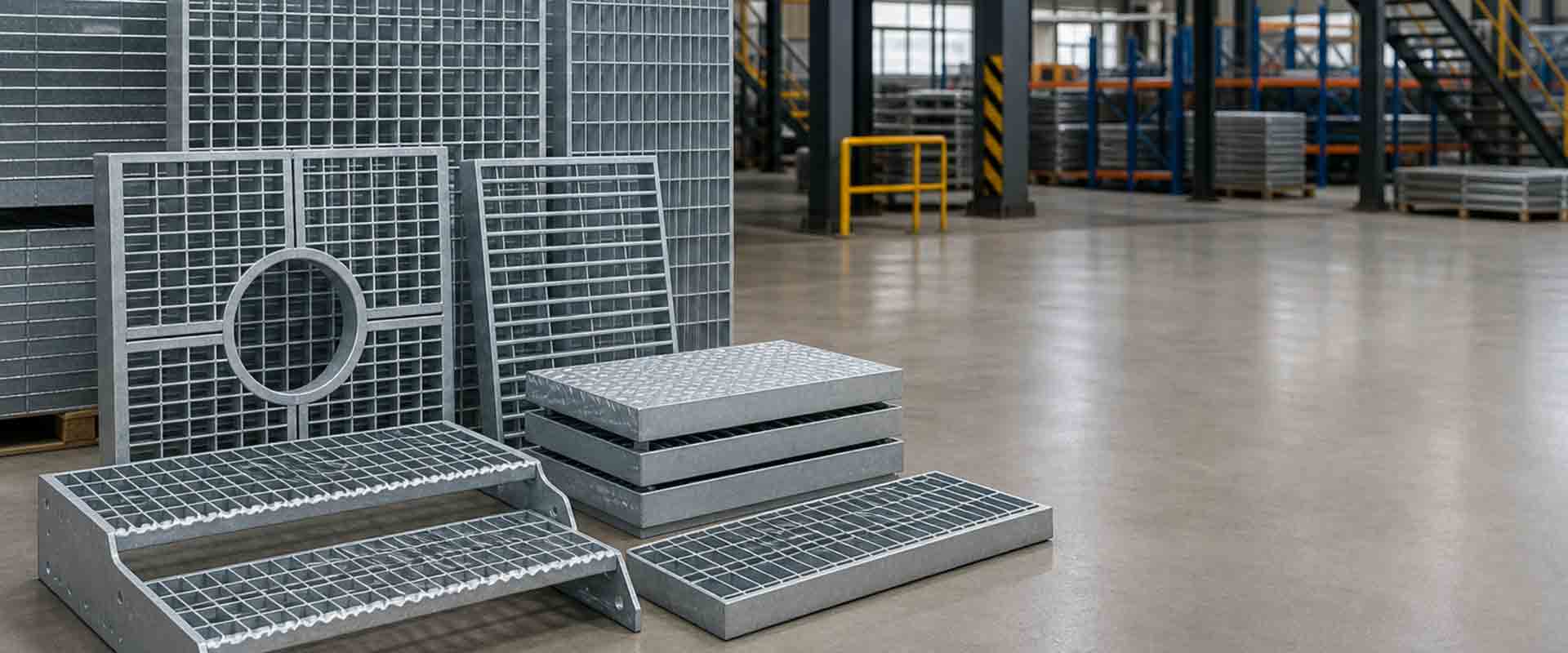
One common mistake is assuming that serrated grating automatically solves every slip problem.
It does not.
Other frequent issues include:
- Ignoring the type of contamination
- Selecting by surface profile alone
- Overlooking support span
- Ignoring load conditions
- Using incorrect bearing bar direction
- Failing to coordinate drainage
- Neglecting maintenance requirements
- Assuming serrations increase structural capacity
- Allowing residue to accumulate
- Poor panel fixing
The best results come from treating surface traction, structure, drainage, environment, and maintenance as connected requirements.
What Information Should Be Reviewed Before Selection?
A useful technical review should include:
| Project Information | Why It Matters |
|---|---|
| Application | Defines how the surface will be used |
| Contamination type | Indicates likely slip conditions |
| Moisture exposure | Helps evaluate surface requirements |
| Clear span | Establishes structural demand |
| Bearing bar configuration | Defines structural section |
| Load type | Identifies required support performance |
| Drainage | Affects surface condition |
| Material | Influences environmental durability |
| Traffic type | Distinguishes pedestrian and wheel use |
| Fixing method | Helps maintain panel stability |
| Cleaning method | Influences long-term traction |
| Drawings | Coordinates fabrication and installation |
Gathering this information early makes it easier to determine whether a serrated surface is appropriate and what structural configuration should accompany it.
Conclusion
Serrated steel grating can be a practical choice for industrial walkways, platforms, stairs, outdoor access systems, and process environments where moisture or contamination may reduce surface traction.
Its main advantage comes from the additional contact edges created along the bearing bars, but this feature should not be treated as a substitute for structural design, drainage, maintenance, or contamination control.
Bearing bar dimensions, spacing, span, support conditions, material protection, fixing, and cleaning all influence long-term performance.
The most effective approach is to select serrated steel grating only after the real operating conditions have been identified. When surface profile, structure, drainage, and maintenance are coordinated together, the grating can provide more reliable access in demanding industrial environments.
FAQ
What is serrated steel grating?
Serrated steel grating uses bearing bars with toothed or notched upper edges. These additional edges can improve surface interaction and are commonly considered for wet, oily, outdoor, or otherwise demanding industrial access areas.
Is serrated steel grating stronger than plain grating?
Not necessarily. Serrations mainly affect surface characteristics. Structural performance still depends on bearing bar dimensions, spacing, span, material, support arrangement, and load conditions.
Where is serrated steel grating commonly used?
Typical applications include industrial walkways, outdoor platforms, stair systems, oil-related facilities, process areas, maintenance access zones, and other environments where moisture or contamination may affect footing.
Can serrated steel grating be used outdoors?
Yes. It can be suitable for outdoor applications when the grating structure, material protection, drainage, environmental exposure, and maintenance requirements are matched to the project conditions.
Does serrated steel grating eliminate slip risk?
No. Serrations can improve surface traction, but drainage, contamination, cleaning, footwear, lighting, stable installation, and maintenance also affect walking conditions.