Table of Contents
Introduction
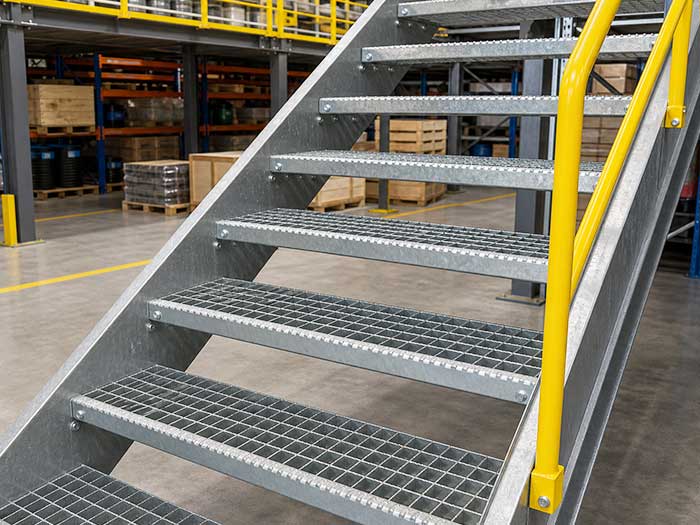
A steel grating platform is widely used in industrial facilities where workers need stable access around machinery, process equipment, elevated structures, maintenance areas, or production systems. Its open-grid construction allows air, light, water, and small debris to pass through while providing a structural walking surface above the supporting steelwork.
However, a platform cannot be designed effectively by selecting panel dimensions alone. Bearing bar direction, support span, structural loading, equipment positions, drainage, panel layout, openings, surface conditions, fixing methods, and maintenance access all influence the final result.
This is especially important in industrial environments because one platform may need to support pedestrian traffic, tools, temporary materials, maintenance equipment, and localized machinery loads at the same time. A reliable design therefore considers the grating and supporting structure as one connected system.
The following eight factors explain what should be reviewed before a steel grating platform configuration is finalized.
What Is a Steel Grating Platform?
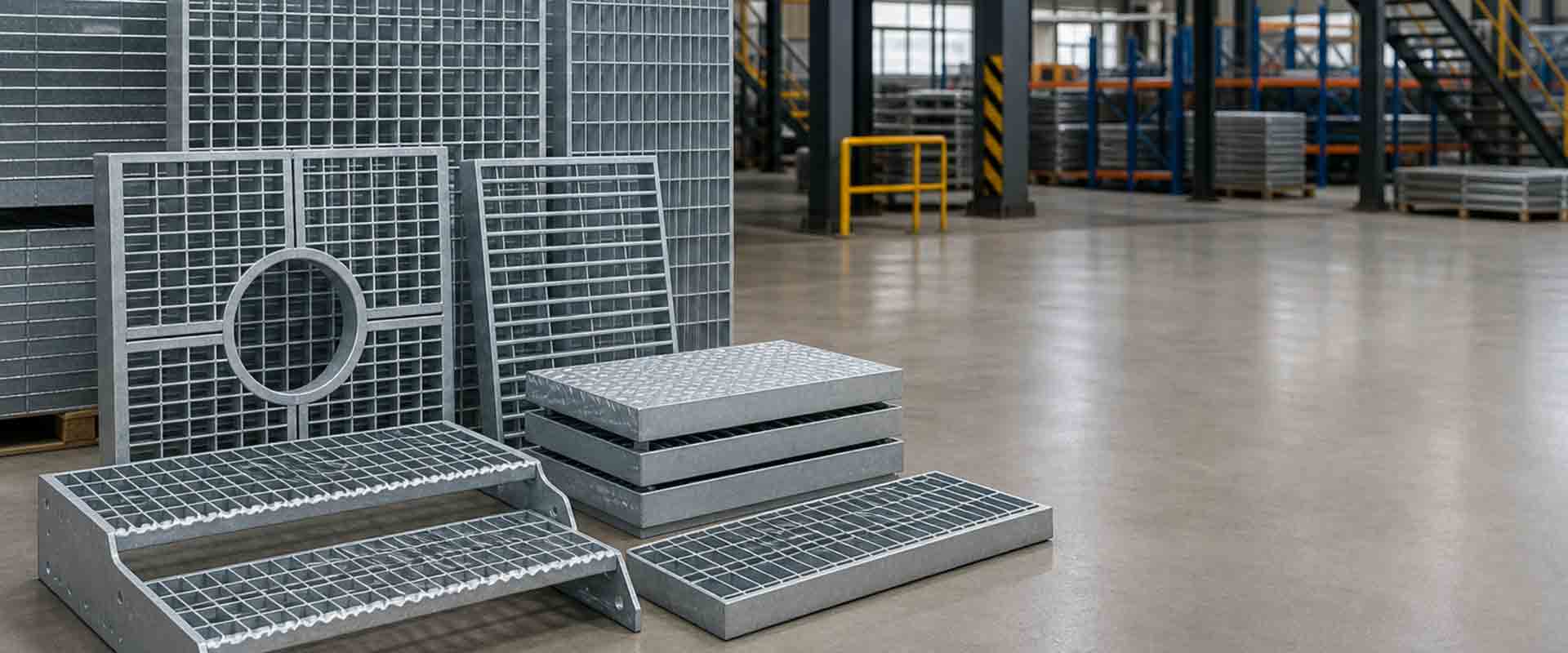
A steel grating platform is an elevated or supported working surface constructed from open-grid grating panels installed over structural beams, frames, or other supporting members.
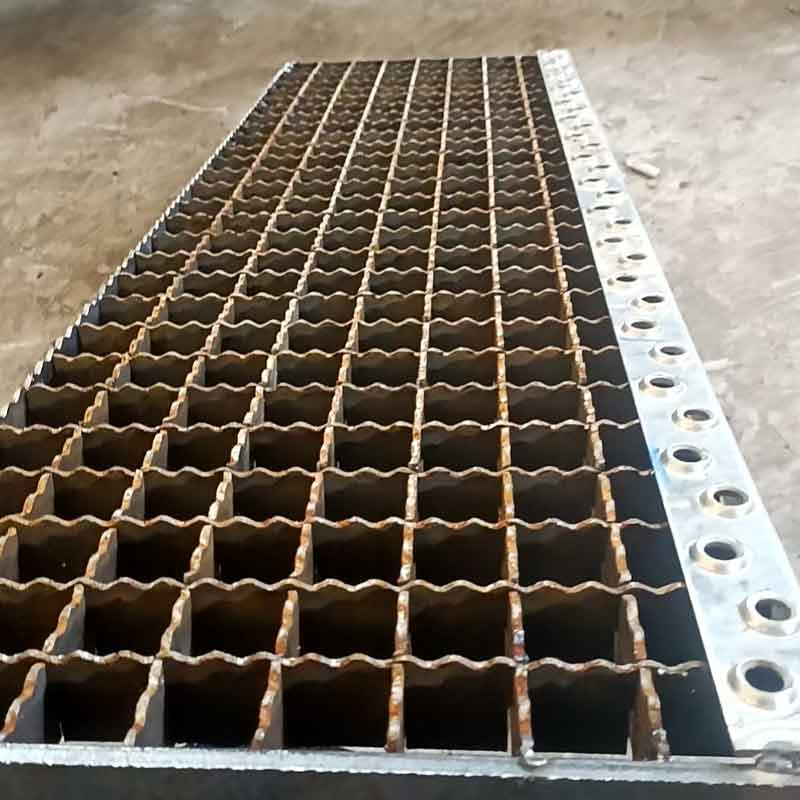
The grating usually consists of parallel bearing bars connected by cross bars. Bearing bars form the primary load path and span between supports, while cross bars maintain spacing and stabilize the grid.
This type of platform is commonly used for:
- Equipment maintenance areas
- Factory access platforms
- Mezzanine floors
- Boiler and machinery access
- Elevated walkways
- Production facilities
- Water treatment systems
- Utility structures
- Steel buildings
The open structure offers practical advantages in locations where drainage, ventilation, visibility, or reduced surface accumulation is important.
At the same time, platform performance depends heavily on the relationship between the grating and the surrounding structural system.
Factor 1: Define the Platform Function First
The first step is to identify how the platform will actually be used.
A maintenance platform accessed occasionally by one or two technicians has very different requirements from a production platform carrying equipment, carts, stored components, or frequent personnel traffic.
The operating function affects almost every later decision.
Important questions include:
- How many people may use the platform?
- Will equipment be installed on it?
- Will carts or wheeled tools cross the surface?
- Are materials temporarily stored there?
- Does the area require regular maintenance access?
- Will liquids or process residue reach the platform?
- Are removable panels required?
- Are pipes or equipment openings present?
Defining these conditions early makes it easier to select an appropriate bearing bar configuration, panel layout, surface profile, and support arrangement.
The goal is not simply to create an elevated floor. The platform needs to support the actual activities that will take place on it.
Factor 2: Coordinate the Grating With the Structural Frame
A steel grating platform depends on the beams and framing below it.
The grating transfers loads into these structural members, which then carry those forces into columns, walls, or other parts of the building or equipment structure.
Understanding basic structural steel principles helps explain why beam spacing, support direction, member stiffness, and connection layout need to be coordinated with the grating rather than developed separately.
The support system should identify:
- Primary beams
- Secondary beams
- Clear span between supports
- Platform edges
- Stair openings
- Equipment openings
- Columns
- Removable access zones
- Panel joints
If support spacing changes across the platform, one grating configuration may not be suitable everywhere.
Areas with longer spans or more demanding loads may require a different bearing bar arrangement from areas supported by closely spaced beams.
This is why grating should ideally be included in platform planning before the supporting steel layout is finalized.
Factor 3: Confirm Bearing Bar Direction
Bearing bar direction is one of the most important details in platform design.
Bearing bars carry the primary load and should normally span directly from one structural support to another.
Cross bars run perpendicular to them and stabilize the grid, but they are not normally intended to replace bearing bars as the principal spanning members.
This means panel orientation matters.
A rectangular panel may appear to fit correctly even when rotated, but its structural behavior can change significantly if the bearing bars no longer align with the supporting beams.
Platform drawings should clearly show:
- Bearing bar direction
- Structural support lines
- Panel marks
- Panel dimensions
- Cutouts
- Equipment openings
- Removable sections
Clear identification helps reduce installation errors and makes future panel replacement easier.
Factor 4: Match Bearing Bars to Span and Load
Bearing bar depth, thickness, and spacing directly affect platform performance.
Deeper bearing bars generally provide greater resistance to bending, while thickness also contributes to stiffness and structural capacity.
Spacing affects how many bearing bars are present across a given panel width.
The selected configuration should therefore reflect both the unsupported span and the expected loads.
Senfa’s current platform steel grating configurations include multiple bearing-bar dimensions and spacing patterns, reflecting the fact that industrial platforms may require different structural arrangements depending on the application.
The platform specification should consider:
- Clear span
- Uniform loads
- Concentrated loads
- Equipment feet
- Wheel loads
- Maintenance activity
- Deflection requirements
A larger bearing bar is not automatically the best solution.
The correct configuration is the one that matches the actual structural demand while also meeting drainage, access, handling, and installation requirements.
Factor 5: Evaluate Equipment and Concentrated Loads
Industrial platforms often support more than people.
Machinery, motors, pumps, valves, control systems, storage containers, and maintenance equipment can create localized forces that differ significantly from normal pedestrian loading.
A heavy object supported on several small feet can create concentrated loads at specific points.
For this reason, equipment locations should be identified before panel layout is finalized.
Important information includes:
| Equipment Information | Why It Matters |
|---|---|
| Equipment position | Shows where concentrated loads occur |
| Support feet | Defines local contact points |
| Equipment weight | Establishes structural demand |
| Vibration | Influences fixing and support |
| Maintenance clearance | Affects removable panels |
| Future replacement route | Influences access layout |
Where loads are particularly high, the equipment may need dedicated structural support beneath it rather than relying entirely on the grating panel.
Grating should normally function as the working surface around equipment, while the primary structural framing carries the major machinery loads.
Factor 6: Plan Openings and Cutouts Before Fabrication
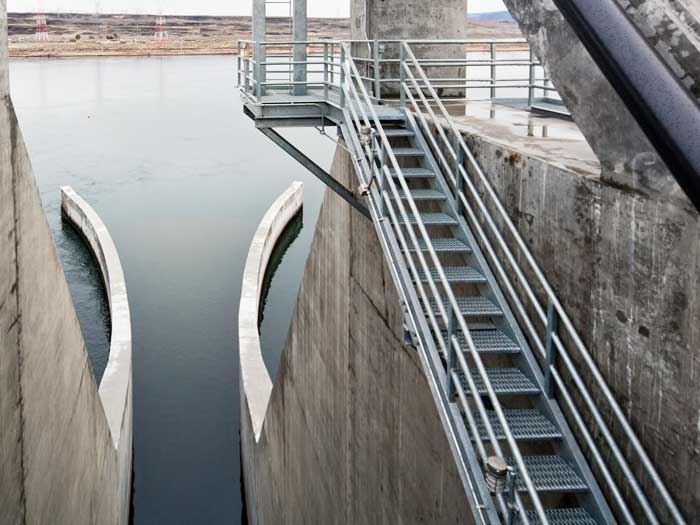
Industrial platforms often contain numerous penetrations.
Common examples include:
- Pipes
- Columns
- Cable trays
- Valves
- Ducts
- Machinery supports
- Ladders
- Stair openings
These features interrupt regular panel layouts.
A cutout can also remove one or more bearing bars, changing the way the remaining panel transfers loads.
Large openings may require:
- Edge banding
- Additional support beams
- Smaller surrounding panels
- Reinforced framing
- Removable covers
The position of an opening is important as well as its size.
An opening located near the center of a span may affect the grating differently from an opening positioned close to a support.
Accurate fabrication drawings should therefore show the relationship between each cutout and the structural framing underneath.
Detailed information about bearing bar positioning, custom fabrication, edge reinforcement, and different grating types can be incorporated through broader steel grating technical requirements during platform planning.
Factor 7: Consider Surface Conditions and Drainage
Open grating is particularly useful where a platform may be exposed to water, dust, process residue, or outdoor conditions.
Liquids can pass through the openings instead of remaining on a solid floor surface.
However, effective drainage still depends on the entire installation.
The area below the platform should allow liquids to move away rather than collect around structural members.
Platform designers should consider:
- Water exposure
- Process liquids
- Cleaning procedures
- Dust
- Oil contamination
- Outdoor rainfall
- Drainage direction
- Debris accumulation
Where surface traction is an important concern, serrated bearing bars may be considered.
However, a serrated surface does not replace proper drainage or cleaning.
The best results come from combining suitable surface configuration with good housekeeping and effective liquid removal.
Factor 8: Design for Maintenance and Future Access
Industrial platforms often exist primarily to make machinery easier to inspect and maintain.
The platform itself should therefore support future maintenance activities.
Important design considerations include:
- Removable panels
- Access around equipment
- Stair and ladder locations
- Clearance around valves
- Lifting routes
- Inspection openings
- Drainage access
- Fixing accessibility
Removable grating sections can be particularly useful where equipment or services below the platform require periodic access.
However, removable panels still need to remain stable during normal operation.
The fixing system should therefore balance panel security with practical maintenance access.
Panels should also be sized so that maintenance personnel can handle them safely using the available lifting method.
Steel Grating Platform for Industrial Equipment
Equipment platforms are one of the most common industrial uses of open grating.
These structures provide access to machinery that may be elevated above the factory floor or positioned within large processing systems.
The platform should provide enough space for workers to inspect and maintain equipment without interfering with machinery operation.
Equipment platforms may also require:
- Guardrails
- Stair access
- Toe plates
- Removable panels
- Equipment openings
- Lighting access
- Drainage
The grating layout should follow the structural framing while also providing practical walking routes.
Panel joints should not create unstable transitions around areas where personnel frequently stand or work.
Steel Grating Platform for Mezzanine Floors
Mezzanines create additional working or storage space above the main floor.
Where open grating is used, the platform can allow light and air to pass between levels.
The design should still consider activities above and below the mezzanine.
Falling objects may be a concern where small tools, components, or materials can pass through the openings.
Depending on the application, closer spacing, secondary screening, toe plates, or other protective measures may be required.
Mezzanine design should also consider:
- Access stairs
- Emergency routes
- Stored materials
- Equipment loads
- Traffic patterns
- Support columns
- Panel removal
The surface should therefore be selected according to how both levels of the structure are used.
Steel Grating Platform for Maintenance Walkways
Maintenance platforms and elevated access routes often surround boilers, tanks, processing vessels, conveyors, or other industrial equipment.
These areas may be relatively narrow, making layout particularly important.
Workers need sufficient space to move safely, carry tools, and reach maintenance points.
Valves, gauges, inspection covers, and equipment doors should remain accessible.
The grating layout should avoid unnecessary panel joints or cutouts directly in high-use working positions.
Where the platform is outdoors or exposed to process liquids, drainage and surface conditions should also be considered.
Support Span and Platform Stiffness
A platform needs adequate structural capacity, but stiffness is also important.
Excessive deflection can make a platform feel unstable even when the material remains below its structural limit.
Movement may be especially noticeable on elevated access platforms.
Deflection can be influenced by:
- Bearing bar depth
- Bearing bar thickness
- Clear span
- Load magnitude
- Bar spacing
- Support stiffness
Reducing support spacing can sometimes improve platform stiffness without changing every grating panel.
This illustrates why the grating and structural frame should be optimized together.
Plain or Serrated Platform Surface?
Plain and serrated grating can both be used on industrial platforms.
Plain bearing bars may be suitable for many dry, controlled environments.
Serrated bearing bars create additional surface edges and may be considered where moisture, oil, mud, or process contamination can affect traction.
Surface selection should be based on actual conditions.
The project should consider:
- Contamination type
- Cleaning frequency
- Outdoor exposure
- Footwear
- Drainage
- Maintenance
A serrated surface is not automatically necessary for every industrial platform.
Likewise, a plain surface should not automatically be used in an area that frequently becomes wet or contaminated.
Panel Size and Platform Layout
Very large panels are not always the most practical option.
Although larger panels reduce the number of joints, they may be more difficult to handle, install, or remove during maintenance.
Very small panels create the opposite problem by increasing the number of joints and fixings.
Panel layout should therefore balance:
- Structural support
- Handling
- Installation
- Maintenance
- Equipment access
- Panel joints
- Removable areas
Where possible, panel joints should align with suitable structural support.
Irregular platform geometry may also be divided into smaller sections to simplify fabrication and installation.
Fixing the Platform Grating
Grating panels should remain stable on the supporting structure.
Mechanical clips, fasteners, or suitable permanent connections may be used depending on the application.
The fixing method should reflect:
- Vibration
- Foot traffic
- Wheeled equipment
- Outdoor exposure
- Panel removability
- Maintenance access
- Structural support geometry
Loose panels can move, rattle, or become misaligned.
At the same time, unnecessarily permanent attachment can make future access difficult.
The fixing strategy should therefore be established before installation rather than decided independently in the field.
Stair and Platform Coordination
Industrial platforms commonly connect to stair systems.
The transition between the top stair tread and the platform should be coordinated carefully so that the walking surface remains consistent.
Important considerations include:
- Stair width
- Platform elevation
- Landing dimensions
- Grating orientation
- Guardrail position
- Toe plates
- Panel support
The landing area often experiences concentrated foot traffic, so stable support and secure fixing are especially important.
Where the platform or stairs are exposed to moisture, drainage should also remain effective around the transition.
Guardrails and Edge Protection
Elevated platforms usually require edge protection based on the applicable project requirements.
Guardrails, toe plates, and access gates should be coordinated with the grating and supporting structure.
Posts should connect to suitable structural members rather than relying on weak panel edges.
Toe plates may also help reduce the possibility of objects falling from elevated platforms.
The placement of edge protection should be considered during fabrication planning because it can affect:
- Panel dimensions
- Cutouts
- Fixing locations
- Stair openings
- Equipment access
Grating and access-protection components should be treated as parts of the same platform system.
Corrosion and Environmental Exposure
Industrial platforms may operate indoors, outdoors, or in chemically demanding environments.
Material protection should reflect those conditions.
Factors to review include:
- Humidity
- Rain
- Chlorides
- Chemicals
- Temperature
- Cleaning liquids
- Industrial pollution
The selected material or protective treatment should be compatible with the environment.
Areas around connections, cut edges, supports, and drainage points deserve particular attention because moisture or debris may remain there longer than on exposed panel surfaces.
Environmental conditions should therefore influence both material selection and inspection planning.
Platform Inspection and Maintenance
Platforms should be inspected periodically after installation.
Routine inspection may include:
- Grating movement
- Loose fixings
- Damaged bearing bars
- Corrosion
- Support condition
- Blocked drainage
- Damaged cutouts
- Panel alignment
- Stair transitions
- Guardrails
Areas around machinery deserve particular attention because vibration or repeated maintenance work may affect nearby panels.
Removable panels should always be returned to their correct location and orientation after access work is completed.
A consistent inspection process helps maintain the platform configuration originally established during design.
Common Steel Grating Platform Design Mistakes
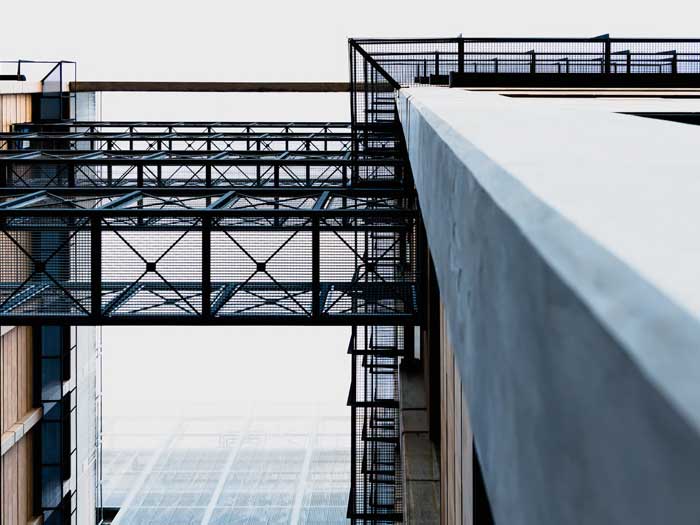
Several problems can occur when platform design focuses only on panel dimensions.
One common mistake is ignoring bearing bar direction.
Another is selecting the same grating configuration across the entire platform even though support spans or equipment loads vary.
Other issues include:
- Unsupported panel edges
- Poorly positioned equipment cutouts
- Inadequate maintenance access
- Excessive panel size
- Unstable removable panels
- Ignoring concentrated loads
- Poor drainage
- Incorrect fixing locations
- Stair and platform misalignment
- Failure to coordinate guardrails
Most of these issues are easier to correct during design than after fabrication.
Information Needed Before Designing a Steel Grating Platform
A useful platform review should include:
| Project Information | Why It Matters |
|---|---|
| Platform dimensions | Defines overall layout |
| Support beam spacing | Establishes clear span |
| Bearing bar direction | Defines primary load path |
| Pedestrian traffic | Establishes normal use |
| Equipment position | Identifies concentrated loads |
| Equipment support points | Defines local structural demand |
| Surface exposure | Influences traction and material |
| Drainage requirements | Affects open-area selection |
| Cutouts | Coordinates pipes and machinery |
| Stair locations | Defines access transitions |
| Removable panels | Supports maintenance |
| Guardrail positions | Coordinates edge structure |
Accurate structural and equipment drawings make this information much easier to coordinate.
Conclusion
A steel grating platform should be designed as a complete access and structural system rather than a collection of individual panels.
Bearing bar direction, support span, load conditions, equipment positions, panel dimensions, openings, drainage, surface configuration, fixing methods, stairs, guardrails, and maintenance access all influence how the platform performs.
The most effective approach is to define the platform function first and then coordinate the grating with the underlying structural frame.
When the panel layout, bearing bars, equipment openings, supports, and access requirements are considered together, the finished platform can provide stable industrial access while remaining practical for inspection and maintenance.
FAQ
What is a steel grating platform used for?
A steel grating platform is commonly used for industrial equipment access, maintenance areas, mezzanines, factory floors, elevated walkways, processing facilities, and other structures requiring an open load-bearing surface.
What determines the bearing bar direction on a platform?
Bearing bars should normally span between the primary supporting members. Their direction is determined by the structural support layout rather than by the visual orientation of the platform.
Can equipment be placed on a steel grating platform?
Equipment can be incorporated into platform systems when the loads, support points, clear span, structural frame, and grating configuration are properly evaluated. Particularly demanding equipment may require dedicated structural support.
Why are cutouts important in platform design?
Cutouts allow grating to fit around pipes, columns, machinery, and other components, but they may interrupt bearing bars. Their size, location, edge treatment, and surrounding support should therefore be coordinated before fabrication.
Should platform grating panels be removable?
Some panels may benefit from being removable where equipment, utilities, or structural areas below the platform require regular access. Removable panels should still remain stable and securely fixed during normal operation.