Table of Contents
Introduction
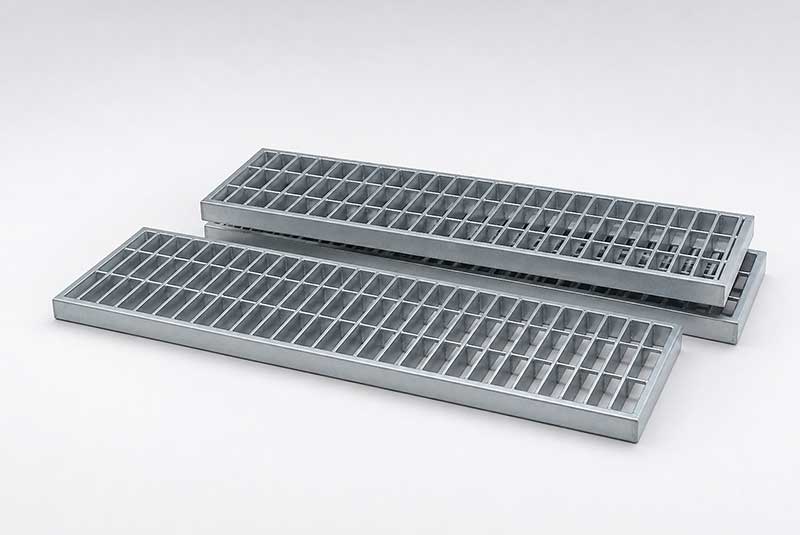
Galvanized steel grating is widely used for industrial platforms, elevated walkways, maintenance access areas, drainage systems, stair systems, and equipment floors. Its appeal comes from combining the load-bearing structure of steel bar grating with a zinc coating that helps protect the underlying steel from corrosion.
However, the word “galvanized” does not automatically mean that every grating panel will perform equally well. Two panels may have a similar appearance but differ greatly in bearing-bar size, spacing, welding quality, surface condition, coating consistency, edge treatment, panel layout, and installation support.
The most important principle is simple: galvanizing protects the steel, but it does not determine the structural capacity of the grating. Load performance still comes from the bearing bars, clear span, material properties, cross-bar connections, support arrangement, and fixing method.
A reliable specification must therefore consider the steel structure and the protective coating as one complete system. This article explains what galvanized steel grating does well, what determines its performance, and which details should be checked before fabrication and installation.
What Galvanizing Changes—and What It Does Not
Galvanizing adds a zinc-based protective layer to the steel surface. In the common hot-dip process, a fabricated steel component is immersed in molten zinc after suitable surface preparation. The coating forms a barrier between the base steel and the surrounding environment.
The coating provides corrosion protection, but it does not compensate for an undersized bearing bar, an excessive span, weak welds, insufficient edge support, or incorrect installation.
This distinction is essential because galvanized steel grating performs two different jobs at the same time:
- The steel grating structure carries loads and transfers them into the supporting frame.
- The galvanized coating protects that structure from environmental exposure.
If either part is poorly specified, the completed panel may not meet the intended service requirements. A thick coating cannot correct inadequate structural design, and a strong grating panel can still experience premature deterioration if coating coverage or drainage details are poor.
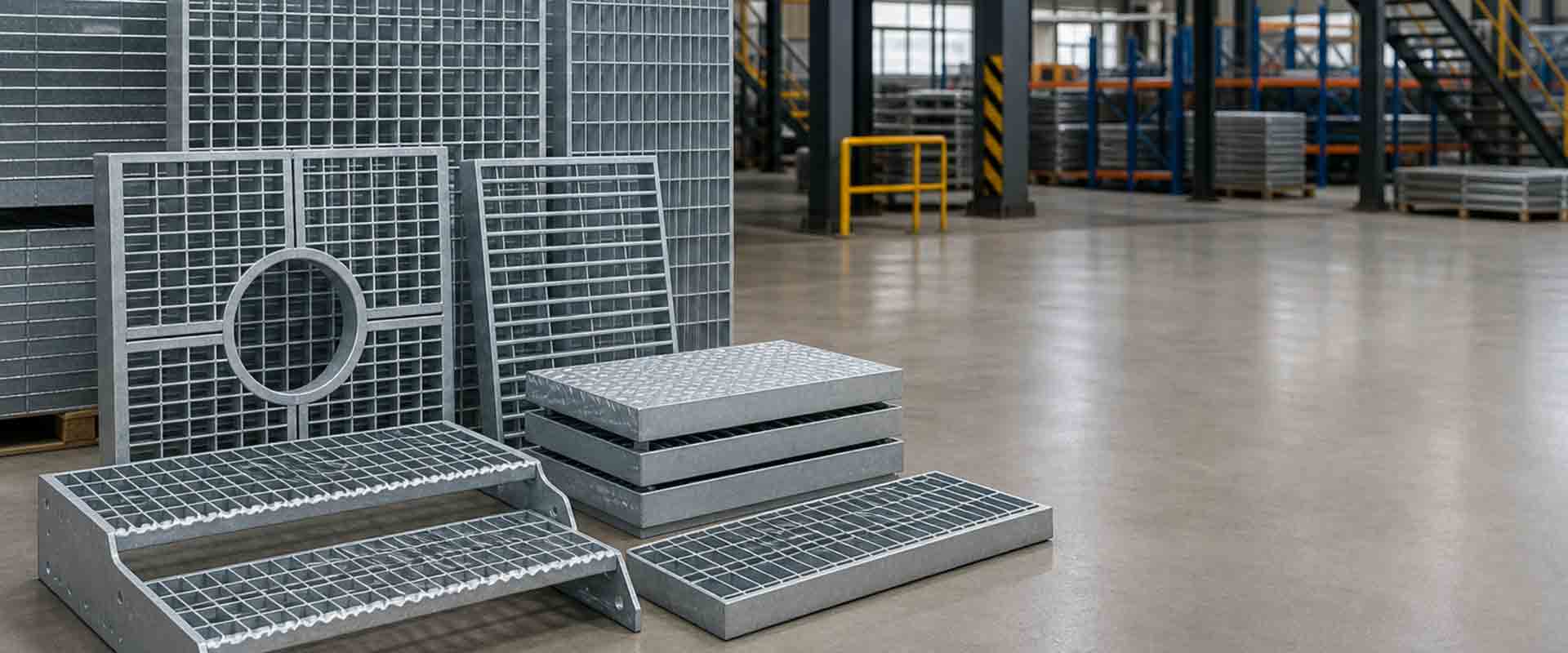
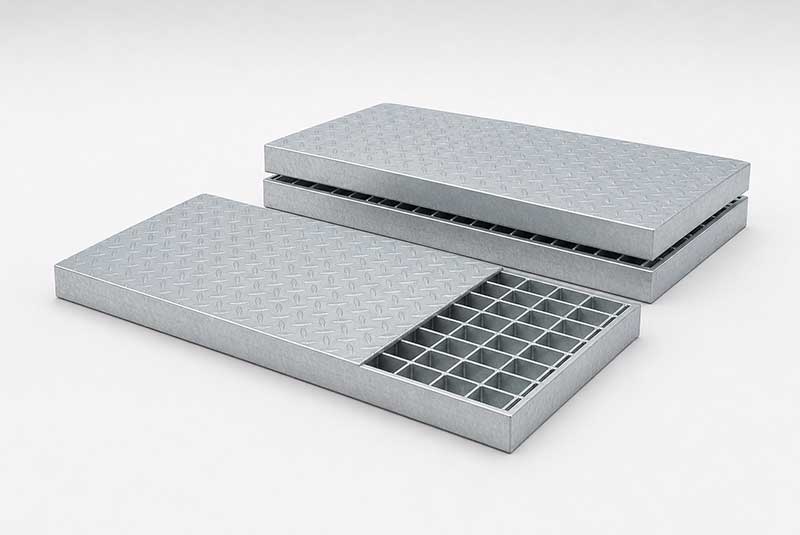
Senfa’s technical resources identify hot-dip galvanized grating as part of its anti-corrosion product range and recommend it for platforms, walkways, drainage systems, warehouses, and other demanding applications. The website also distinguishes galvanized grating from serrated, heavy-duty, press-locked, stainless steel, and compound configurations.
How the Zinc Coating Protects the Steel
The protective behavior of galvanized steel is more advanced than simply covering the surface with another material.
The zinc layer first acts as a physical barrier. When the coating remains intact, moisture, oxygen, and contaminants have less direct access to the underlying steel.
Zinc can also provide sacrificial protection in limited areas where the coating is scratched or locally damaged. Because zinc is more reactive than iron, it tends to corrode preferentially, helping protect nearby exposed steel. This is one reason galvanized components can retain protection even when small surface defects occur.
The process known as galvanization generally refers to applying zinc to iron or steel to reduce rust formation, with hot-dip galvanizing being one of the most commonly used methods.
This does not mean coating damage can be ignored. Large bare areas, field-cut edges, welded zones, persistent contamination, trapped water, and aggressive exposure can consume the available zinc protection more quickly. Damaged areas should be evaluated and repaired using a method suitable for the project requirements.
Structural Performance Begins With the Bearing Bars
The bearing bars are the primary load-carrying members in most welded steel grating panels. They run in one direction and span between the supporting beams, angles, channels, or frames.
Cross bars run perpendicular to the bearing bars. Their main functions are to maintain spacing, stabilize the assembly, and help distribute localized loads. They are important, but they should not normally be treated as equal substitutes for the main bearing bars.
The structural performance of galvanized steel grating depends on several connected variables:
- Bearing-bar depth
- Bearing-bar thickness
- Bearing-bar spacing
- Clear span
- Steel grade
- Load type
- Load contact area
- Support-seat width
- Welding or locking method
- Allowable deflection
A deeper bearing bar usually provides a significant increase in bending resistance because more material is positioned farther from the neutral axis. Increasing bar thickness can also improve capacity, but depth and thickness do not influence panel behavior in exactly the same way.
This is why selecting galvanized steel grating only by panel length and width is unreliable. The panel may fit the opening while still being unsuitable for the actual load or span.
Define the Load Before Choosing a Specification
The intended load should be established before bearing-bar dimensions or spacing are finalized.
Uniform Loads
A uniform load is distributed over a relatively large surface area. Examples include groups of pedestrians, evenly distributed materials, or equipment supported over a broad base.
Concentrated Loads
A concentrated load reaches the grating through a smaller contact area. Cart wheels, equipment feet, support legs, maintenance tools, and narrow rollers can create concentrated forces.
A concentrated load is often more demanding than the same total weight spread over a larger area because fewer bearing bars participate in carrying it.
Dynamic Loads
Moving equipment may introduce vibration, repeated loading, impact, acceleration, and braking forces. These conditions require more attention than a stationary load of the same nominal weight.
A complete load description should identify the maximum force, contact dimensions, travel direction, frequency of use, possible impact, and location relative to the supports.
Using terms such as light duty or heavy duty without defining the actual load conditions can lead to an incomplete specification.
Select Bearing-Bar Dimensions and Spacing Together
Bearing-bar depth, thickness, and spacing should be selected as a coordinated system.
Closer bearing-bar spacing places more structural members beneath a given contact area. This can improve load distribution and reduce the size of surface openings. It may also improve movement for smaller wheels.
Wider spacing increases the open area and may reduce panel mass, but it can create larger openings and place each bearing bar under a greater share of the load.
Senfa’s technical information lists common examples such as 25 × 3 mm, 30 × 3 mm, 32 × 5 mm, and 40 × 5 mm bearing bars, along with bearing-bar spacing options of 30, 40, and 60 mm and cross-bar spacing of 50 or 100 mm. Its galvanized serrated product page provides additional configurations for customized applications. These values are product options rather than universal recommendations; the final specification must still be checked against the project load and span.
The following table shows how different operating conditions affect the selection process.
| Application condition | Main design concern | Galvanized steel grating detail to evaluate | Risk if overlooked |
|---|---|---|---|
| Pedestrian walkway | Comfort and stable footing | Deflection, spacing, panel support and surface type | Excessive movement or uncomfortable walking |
| Maintenance platform | Equipment and personnel loads | Bearing-bar size, span and concentrated load | Local bending or permanent deformation |
| Wet processing area | Traction and corrosion exposure | Serrated surface, drainage and coating condition | Slipping or accelerated coating loss |
| Drainage channel | Water flow and removable access | Open area, frame support and panel fixing | Restricted drainage or cover movement |
| Wheeled route | Small contact area and repeated loading | Bar spacing, wheel width and support direction | Unstable travel or overloaded bars |
| Outdoor platform | Moisture and environmental exposure | Galvanizing quality, drainage and edge treatment | Premature corrosion at trapped-water areas |
| Equipment floor | Localized support feet | Contact dimensions and bar orientation | High stress on a limited number of bars |
| Removable access panel | Handling and repositioning | Panel size, banding, clips and identification | Unsafe lifting or incorrect replacement |
Decide Between Plain and Serrated Surfaces
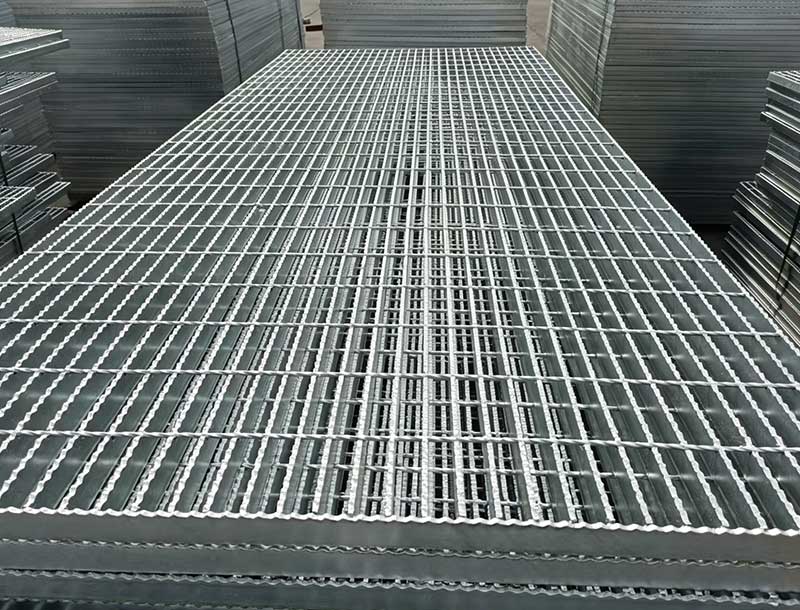
Galvanized steel grating can be manufactured with plain or serrated bearing bars.
Plain grating has a relatively flat upper surface. It is suitable for many dry, controlled areas where drainage, ventilation, and structural support are the main priorities.
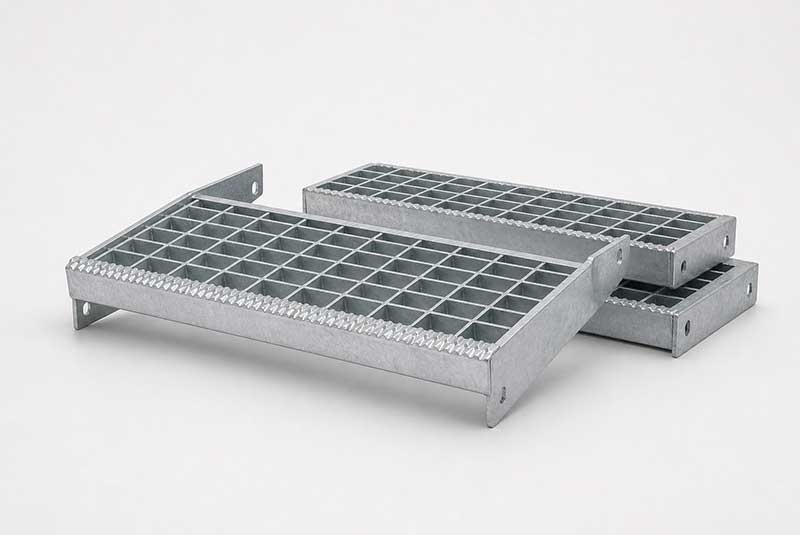
Serrated grating includes notches or tooth-like edges along the upper surface of the bearing bars. These additional edges can improve traction when the surface is exposed to water, oil, mud, fine dust, or process residue.
Senfa’s galvanized serrated bar grating is offered for floors, decks, walkways, platforms, and customized fabricated shapes. Its published configurations include multiple bearing-bar dimensions and spacing options rather than a single standard pattern.
Serrations should not be treated as a complete slip-prevention system. Surface geometry works together with housekeeping, drainage, footwear, lighting, panel rigidity, walking direction, and contamination control.
A serrated surface that is covered by compacted debris may provide less reliable traction than a clean, properly drained surface. Good maintenance remains necessary regardless of the grating pattern.
Match the Open Area to Drainage and Access Requirements
The open-grid structure is one of the most useful characteristics of galvanized steel grating. It allows water, air, light, and some debris to pass through the panel instead of collecting on the surface.
However, maximizing the open area is not always the best solution.
Large openings can create difficulties for narrow wheels, walking aids, small tools, fasteners, or materials handled above occupied areas. Smaller openings may improve object retention and surface stability but can reduce water flow and increase debris accumulation.
The correct opening pattern should answer three practical questions:
- What needs to pass through the grating?
- What must remain above the grating?
- What type of footwear or equipment will travel across it?
For drainage areas, the grating should provide enough open area for the expected flow without becoming the limiting point in the drainage path. For elevated platforms, the risk of falling objects may require closer spacing, toe plates, secondary screening, or other protective details.
Open-area selection is therefore a balance between drainage efficiency, surface safety, wheel compatibility, cleaning access, and the activities taking place below the platform.
Choose Galvanized Steel Grating for the Right Environment
Galvanized steel grating is frequently used where carbon steel needs additional protection from moisture and atmospheric exposure.
Typical applications include:
- Industrial platforms
- Maintenance walkways
- Elevated access systems
- Drainage channels
- Equipment floors
- Stair landings
- Warehouse platforms
- Ventilation flooring
- Utility access areas
- Outdoor operating platforms
A platform steel grating configuration can be manufactured with different bearing-bar dimensions, spacing patterns, panel sizes, and protective surface treatments for floors, mezzanines, walkways, trench covers, and equipment areas.
Galvanized steel grating may not be the ideal option for every exposure. Environments involving strong chemicals, extreme temperatures, frequent immersion, or strict hygiene requirements may need a separate material and corrosion review.
The correct question is not simply whether the environment is wet. The specification should examine the type of moisture, drying cycle, contaminants, cleaning method, temperature, ventilation, and maintenance frequency.
Design Panels for Fabrication and Galvanizing
Good coating performance begins before the panel enters the galvanizing process.
The steel grating should first be fabricated to the required dimensions, including cutouts, banding, toe plates, fixing plates, side plates, and other welded components. Completing major fabrication before galvanizing reduces the need for field cutting or welding that could damage the finished coating.
Panel design should consider:
- Drainage during processing
- Venting of enclosed sections
- Access for surface preparation
- Coating buildup around tight clearances
- Distortion from fabrication and thermal processing
- Handling and lifting points
- Sharp edges
- Weld continuity
- Final dimensional tolerance
Irregular panels require particular attention. A cutout around a pipe or column may remove part of a bearing bar and interrupt the original load path. Banding or additional support may be necessary around the opening.
Panel size also affects coating, transportation, handling, and installation. Very large panels may reduce the number of joints but become more difficult to lift, align, and remove. Smaller panels are easier to handle but may require additional supports and fixings.
The most efficient panel layout usually follows the structural support arrangement rather than dividing the floor into visually equal sections.
Inspect Coating Quality Beyond Surface Appearance
A bright or uniform surface does not by itself confirm that the galvanized steel grating meets every project requirement.
Coating inspection should focus on coverage, continuity, adhesion, drainage marks, sharp deposits, uncoated areas, excess buildup, and dimensions affected by the coating.
Areas that deserve close attention include:
- Weld intersections
- Bearing-bar ends
- Perimeter banding
- Corners
- Cutouts
- Fixing plates
- Narrow gaps
- Threaded sections
- Contact points used during processing
The surface appearance of galvanized steel can vary. Visual variation does not always indicate poor corrosion protection, while a visually attractive surface does not guarantee correct structural dimensions or coating coverage.
Inspection should therefore include both the coating and the grating structure. Bar spacing, panel dimensions, squareness, weld quality, edge treatment, and flatness should be checked before the panel is accepted for installation.
Plan Supports and Fixings Before Installation
A well-manufactured galvanized steel grating panel can still perform poorly if the supporting structure is uneven or incorrectly positioned.
Bearing bars should span in the intended structural direction between supports. The cross bars should not be mistakenly placed in the primary spanning direction.
This error can occur because a rectangular grating panel may appear similar when rotated. Clear identification of the bearing-bar direction on fabrication drawings, panel marks, packaging, and installation plans helps prevent incorrect placement.
The support system should provide:
- Adequate bearing length
- Continuous or correctly positioned support
- Level seating surfaces
- Edge support where required
- Suitable clearance between panels
- Access to clips or fasteners
- Resistance to movement and uplift
Mechanical clips are commonly used where panels need to remain removable. Welding may be appropriate for permanent installation, but any welding performed after galvanizing damages the local coating and requires suitable repair.
Fixings should prevent movement without introducing local distortion. Excessive tightening can bend a panel or pull it away from adjacent supports, while insufficient fixing can allow vibration, noise, uplift, or lateral movement.
Prevent Water Traps and Debris Accumulation
Galvanized steel grating is often selected because its open construction allows water to pass through. Yet poor surrounding design can still create moisture traps.
Water may collect where:
- Support angles are installed without drainage
- Panel edges contact solid walls
- Debris blocks the openings
- Frames have uneven low points
- Toe plates prevent surface runoff
- Coating buildup closes narrow gaps
- Structural members create hidden pockets
Persistent moisture does not always attack the center of an open panel first. Corrosion problems frequently begin near interfaces, supports, damaged areas, or locations where dirt remains wet for long periods.
The surrounding structure should therefore be designed with the same care as the grating. A corrosion-resistant panel installed on a poorly drained frame may still require frequent maintenance.
Cleaning access should also be considered. Panels that cannot be removed or reached easily may allow sediment to build up beneath the surface and restrict drainage.
Understand What Determines Service Life
There is no single service-life figure that applies to every galvanized steel grating installation.
Performance depends on:
- Zinc coating characteristics
- Base-steel condition
- Environmental exposure
- Moisture and drying cycles
- Chemical contamination
- Temperature
- Mechanical abrasion
- Frequency of cleaning
- Field modifications
- Panel support
- Inspection and repair practices
Areas with frequent foot or wheel traffic may experience mechanical wear on the upper surface before other parts of the coating show significant change. Cut edges or field-welded areas may require attention earlier than factory-finished surfaces.
The correct maintenance approach is condition-based. Inspections should look for coating damage, red rust, loose clips, bent bars, cracked welds, trapped debris, blocked drainage, unstable panels, and deformation around concentrated loads.
Small defects are generally easier to manage when identified before they develop into larger structural or corrosion problems.
Prepare a Complete Galvanized Steel Grating Specification
A useful technical specification should describe the required performance rather than relying only on a product name.
Include:
- Application and operating conditions
- Uniform, concentrated, and dynamic loads
- Clear span and support arrangement
- Bearing-bar direction
- Bearing-bar depth and thickness
- Bearing-bar spacing
- Cross-bar type and spacing
- Plain or serrated surface
- Panel dimensions
- Cutouts and irregular shapes
- Banding and toe plates
- Galvanizing requirement
- Fixing method
- Installation clearances
- Inspection requirements
- Required drawings and panel identification
The specification should clearly separate structural dimensions from coating requirements. Stating “galvanized steel grating” without bearing-bar, spacing, span, and load information leaves critical performance decisions unresolved.
Drawings should show support lines, bar direction, panel divisions, edge details, cutouts, fixing points, removable sections, and surrounding structures. A clear drawing often prevents more fabrication errors than a long general description.
Common Galvanized Steel Grating Mistakes
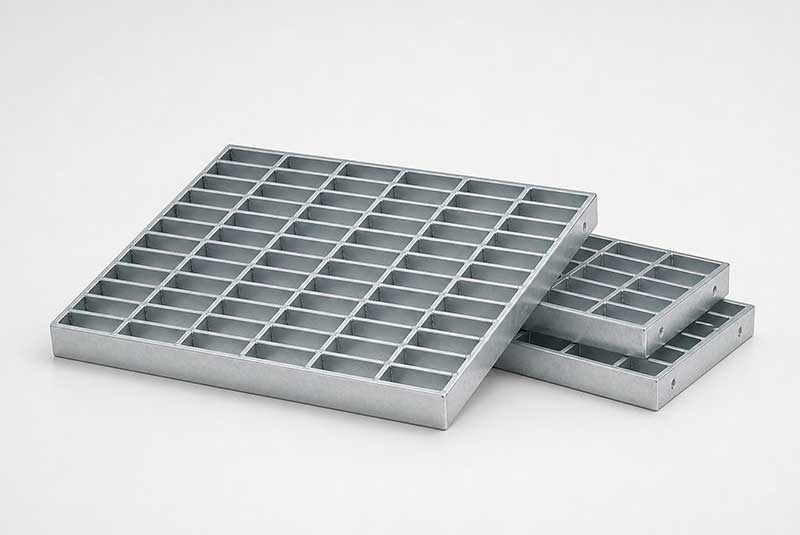
One common mistake is assuming that galvanizing makes a grating panel heavy duty. Galvanizing improves corrosion protection; it does not increase the bearing-bar depth or reduce the clear span.
Another mistake is selecting the widest available spacing to maximize drainage without considering footwear, wheel width, falling-object risk, or concentrated loads.
Other frequent problems include:
- Selecting panels by outside dimensions alone
- Failing to define bearing-bar direction
- Confusing serrations with structural reinforcement
- Ignoring concentrated equipment loads
- Leaving cut panel edges unbanded
- Performing unnecessary fabrication after galvanizing
- Failing to repair field-cut or welded areas
- Installing panels on uneven supports
- Using insufficient clips
- Creating panels that are difficult to remove
- Allowing debris to collect around frame edges
- Copying a specification from an unrelated application
These issues are usually preventable when application, structure, coating, fabrication, and installation are reviewed together before production.
Conclusion
Galvanized steel grating offers a practical combination of structural strength, open-area performance, drainage, ventilation, and corrosion protection. Its long-term reliability, however, depends on more than the zinc coating.
The bearing bars must be selected for the actual load and span. Spacing must suit drainage, footwear, wheels, and object-retention requirements. Fabrication should be completed with attention to cutouts, banding, panel dimensions, and galvanizing access. Supports and fixings must then preserve the intended load path during installation.
The most dependable specification treats galvanized steel grating as an integrated system consisting of the base steel, welded or locked grid, protective coating, support frame, fasteners, surrounding environment, and maintenance plan.
When these elements are coordinated from the beginning, the grating is more likely to remain stable, drain effectively, resist corrosion, and provide reliable access throughout its intended service period.
FAQ
What is galvanized steel grating?
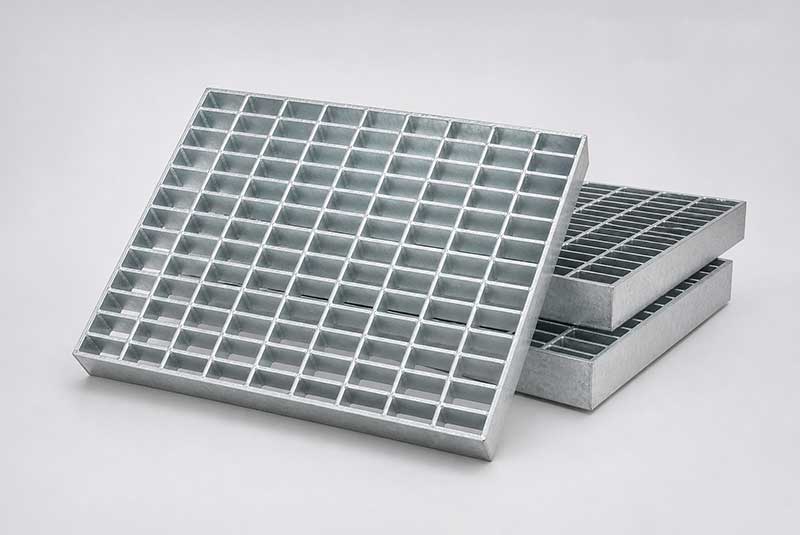
Galvanized steel grating is an open-grid panel made from steel bearing bars and cross bars, followed by a zinc-based protective treatment. The steel structure carries the load, while the galvanized coating helps reduce corrosion caused by moisture and environmental exposure.
Does galvanizing increase the load capacity of steel grating?
No. Galvanizing protects the steel surface but does not substantially change the panel’s structural design. Load capacity depends on bearing-bar depth, thickness, spacing, clear span, material, support arrangement, weld quality, and the size and position of applied loads.
Is serrated galvanized steel grating always necessary?
Not always. Plain grating may be suitable for clean and dry areas. Serrated grating is more relevant where water, oil, mud, dust, or residue may affect traction. Surface selection should also consider drainage, cleaning, footwear, lighting, and walking direction.
Can galvanized steel grating be cut after coating?
It can be modified, but cutting, drilling, or welding removes or damages the coating around the affected area. Major fabrication should preferably be completed before galvanizing. Any exposed steel created during installation should receive an appropriate repair treatment.
How should galvanized steel grating be maintained?
Keep openings and support areas free from debris, inspect clips and welds, check for movement or bent bars, and examine cut edges and high-wear areas for coating damage. Maintenance frequency should reflect moisture, contamination, traffic, abrasion, and access conditions.