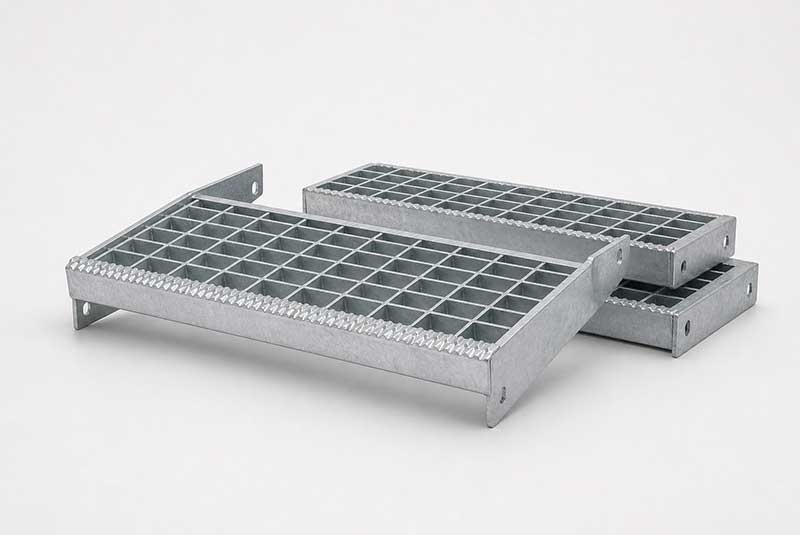
Table of Contents
Introduction
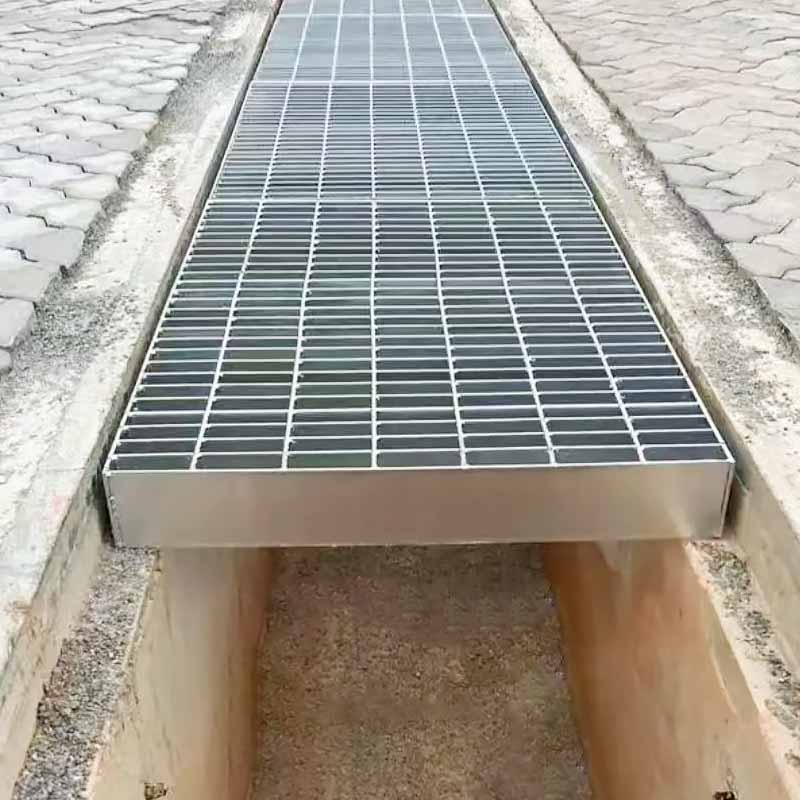
Industrial walkway grating provides a stable access surface around machinery, production lines, tanks, drainage systems, utility equipment, elevated structures, and maintenance areas. Its open-grid construction allows water, air, light, dust, and small debris to pass through while supporting people, tools, carts, and selected equipment loads.
The product may look simple, but selecting it correctly requires more than choosing a panel with suitable length and width. Material, bearing-bar size, spacing, support span, surface profile, environmental exposure, fastening, and maintenance access all influence performance.
A walkway that feels stable in a dry workshop may behave differently when installed outdoors, above vibrating machinery, or in an area exposed to water and process residue. For this reason, industrial walkway grating should be treated as part of the complete access system rather than as an isolated flooring product.
This guide explains:
- How industrial walkway grating carries loads
- Which grating types suit different working conditions
- How material, spacing, and support span affect performance
- When plain, serrated, or close-mesh surfaces may be appropriate
- Why drainage and slip resistance must be considered together
- How to plan supports, joints, cutouts, and fasteners
- Which mistakes commonly lead to movement or premature damage
- How to inspect and maintain an installed walkway
What Is Industrial Walkway Grating?
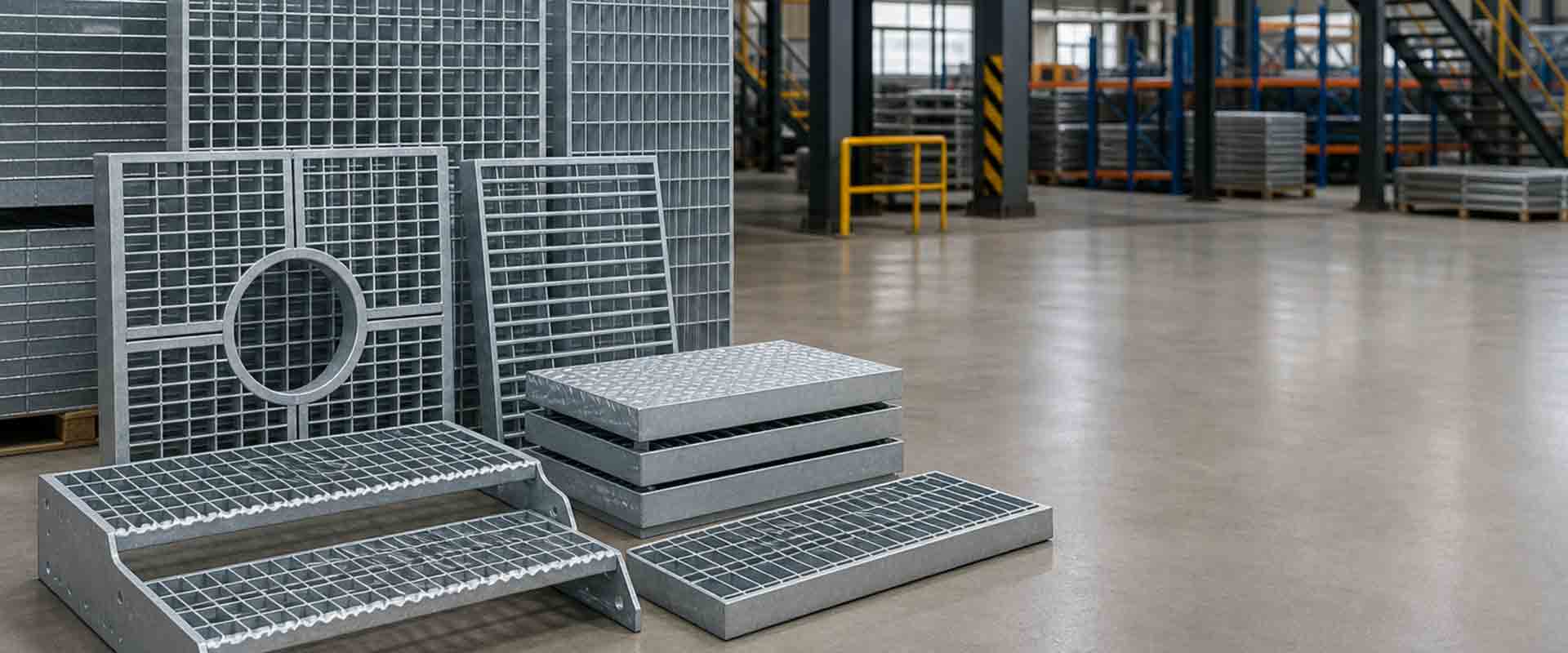
Industrial walkway grating is an open-grid panel designed to create pedestrian or maintenance access across supporting beams, channels, frames, or other structural members.
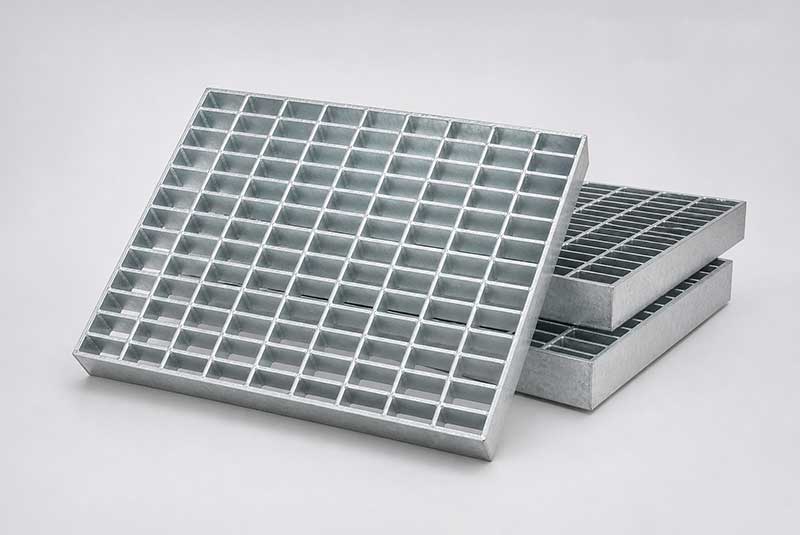
A typical panel contains parallel bearing bars connected by cross bars. The bearing bars carry the primary load and span between structural supports. Cross bars hold those bearing bars at consistent intervals and improve panel stability.
This arrangement creates a surface that is lighter and more open than solid plate flooring. It can reduce standing water, improve ventilation, allow light to reach lower levels, and limit the accumulation of loose material.
Industrial walkway grating is commonly used for:
- Elevated maintenance walkways
- Equipment access platforms
- Catwalks around tanks and machinery
- Utility and service corridors
- Drainage and water-management areas
- Stair landings
- Conveyor access routes
- Inspection platforms
- Pipe-rack access
- Removable service panels
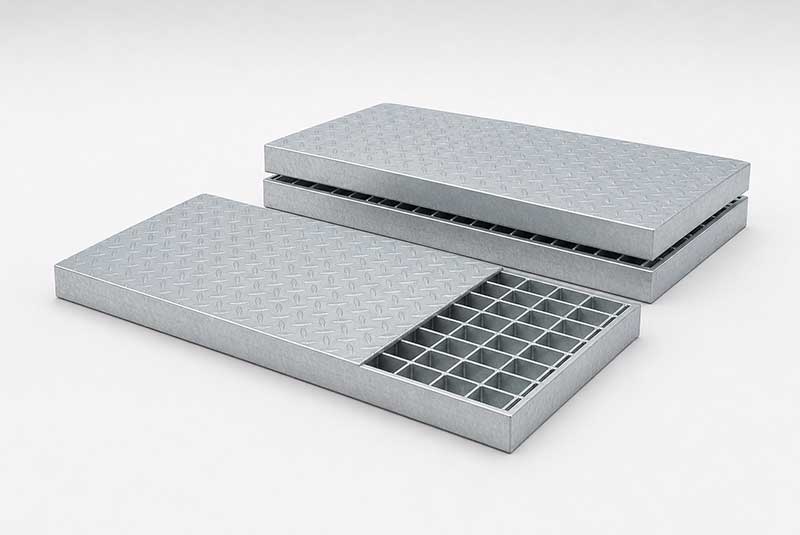
The term does not describe one universal construction. Walkway grating may be welded, press-locked, swage-locked, riveted, close-mesh, serrated, plain, or manufactured for heavier loading conditions.
How Industrial Walkway Grating Carries Loads
The structural performance of a grating panel begins with the bearing bars. These bars run from one support to another and resist bending when a person, cart, tool, or piece of equipment applies force to the surface.
Bearing-bar direction
Bearing bars must span between the supporting members. Cross bars normally run perpendicular to them and are not intended to replace their primary load-carrying function.
One of the most serious installation errors is rotating the panel so that the cross bars span the opening. A panel may still appear supported, but its effective structural capacity can be greatly reduced.
Bearing-bar depth
Deeper bearing bars generally provide greater resistance to bending over a given span. Bar depth is therefore one of the most influential dimensions in a walkway specification.
When a walkway feels flexible, the solution is not always a thicker panel. A deeper bearing bar, shorter span, closer spacing, or additional support may provide a more effective improvement.
Bearing-bar thickness
Thickness contributes to load resistance, durability, local strength, and the ability to handle repeated traffic.
It becomes especially important where carts, equipment wheels, maintenance tools, or concentrated loads may act on a limited number of bars.
Cross-bar function
Cross bars maintain spacing, stabilize the panel, and help distribute localized forces. Their design and connection method also influence panel rigidity and surface feel.
However, walkway calculations should still be based mainly on the bearing bars and their actual support span.
Main Types of Industrial Walkway Grating
Different manufacturing methods create different structural characteristics, surface appearances, and application advantages.
Welded walkway grating
Welded grating is produced by joining cross bars to bearing bars at regular intervals. The welded intersections create a rigid panel that performs consistently under general industrial pedestrian and maintenance loads.
It is commonly used for:
- Factory walkways
- Equipment platforms
- Catwalks
- Stair landings
- Utility access
- Drainage areas
Welded panels can be manufactured in standard sizes or cut and banded according to project drawings.
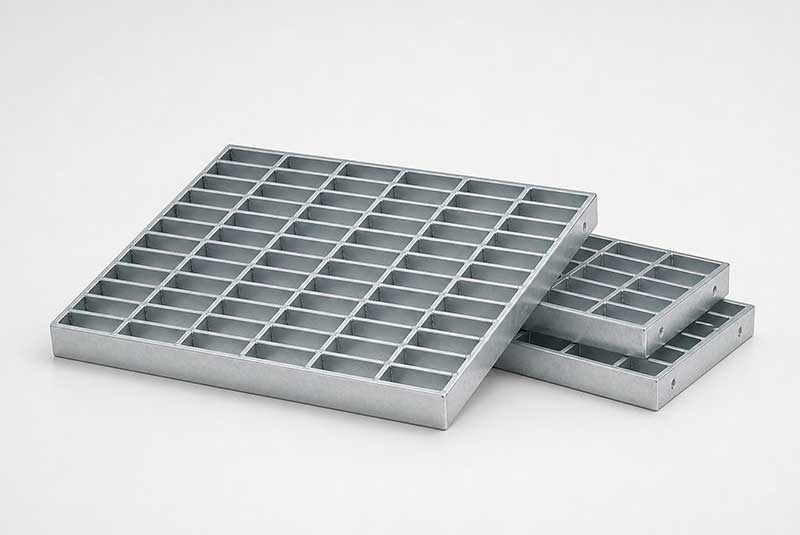
Press-locked walkway grating
Press-locked grating is manufactured by mechanically locking cross bars into prepared bearing bars. The resulting grid usually has uniform spacing and a clean appearance.
This type may be selected where dimensional consistency, visual order, or a particular opening pattern is important.
Its suitability still depends on bar dimensions, material, span, load, and fastening conditions.
Serrated walkway grating
Serrated grating has notches or teeth along the upper surface of the bearing bars. These features create additional contact points between the panel and footwear.
It is often considered for areas exposed to:
- Water
- Oil
- Mud
- Process residue
- Outdoor weather
- Frequent cleaning
Serrations can improve traction, but they do not make a walkway completely slip-proof. Drainage, housekeeping, footwear, lighting, handrails, and surface contamination remain important.
Plain walkway grating
Plain grating has relatively smooth bearing-bar tops. It can provide comfortable pedestrian access in dry and controlled environments.
The simpler surface is often easier to clean and inspect. It may be suitable where liquids, oils, or slippery residue are not expected to remain on the walkway.
Close-mesh walkway grating
Close-mesh grating uses narrower spaces between bearing bars or other grid members.
It may be useful where the walkway must support:
- Narrow cart wheels
- Small equipment casters
- Specialized footwear
- Small tools or components
- Access conditions requiring reduced openings
A smaller opening may improve walking comfort and object retention, but it can also reduce drainage and increase the amount of material used.
Heavy-duty walkway grating
Heavy-duty grating uses larger, deeper, thicker, or more closely spaced bearing bars.
It may be required where a walkway is exposed to maintenance equipment, material-handling devices, concentrated loads, repeated impact, or unusually long spans.
The phrase “heavy duty” should not replace an actual specification. The expected load, wheel contact area, support span, dynamic effects, and allowable deflection must still be defined.
Industrial Walkway Grating Type Comparison
| Grating type | Main characteristic | Typical advantage | Important limitation | Suitable walkway conditions |
|---|---|---|---|---|
| Welded grating | Cross bars welded to bearing bars | High panel rigidity and common availability | Weld and finish quality must be controlled | General industrial platforms and access routes |
| Press-locked grating | Mechanically interlocked grid | Uniform spacing and clean appearance | Performance depends on connection design | Visible walkways and controlled industrial access |
| Plain grating | Smooth bearing-bar surface | Comfortable walking and easier cleaning | Lower traction in contaminated areas | Dry and well-maintained locations |
| Serrated grating | Notched walking surface | Improved contact in wet or oily conditions | Can retain debris and is harder to clean | Outdoor or process-exposed walkways |
| Close-mesh grating | Reduced opening size | Better support for small wheels and tools | Lower open area and potentially greater weight | Walkways with carts or object-retention needs |
| Heavy-duty grating | Larger load-carrying members | Supports demanding or concentrated loads | Requires stronger supports and detailed review | Equipment access and high-load maintenance routes |
This comparison is a starting point rather than a final selection chart. Two panels from the same category may have different capacities because of changes in material, bar dimensions, spacing, span, and support details.
Choosing the Right Grating Material
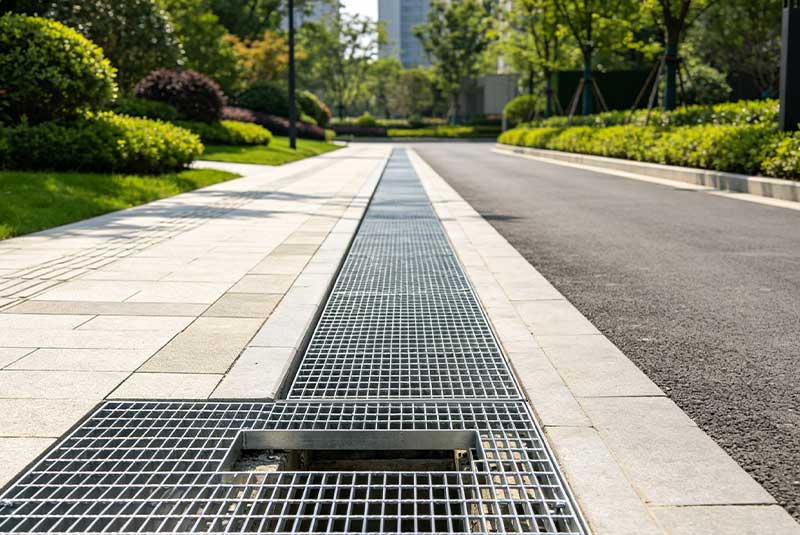
Material selection affects strength, stiffness, corrosion resistance, weight, fabrication, maintenance, and compatibility with surrounding structures.
Carbon steel
Carbon steel is widely used for industrial walkway grating because it provides high structural efficiency and can be fabricated into standard or customized panels.
It is commonly selected for general industrial platforms, elevated access routes, utility walkways, and stair systems.
Where moisture or outdoor exposure is expected, a suitable protective finish should be specified.
Galvanized steel
Galvanized steel grating combines the structural properties of carbon steel with a zinc-based protective coating.
During hot-dip galvanizing, fabricated steel is immersed in molten zinc, creating a bonded protective layer over the surface. Coating performance still depends on exposure, drainage, handling, abrasion, chemical contact, and installation damage.
Galvanized grating is commonly considered for outdoor walkways, wet areas, utility platforms, and locations where long-term corrosion protection is important.
Stainless steel
Stainless steel may be selected where the walkway is exposed to frequent cleaning, moisture, chemicals, sanitation requirements, or demanding corrosion conditions.
Different stainless steel grades behave differently. The expected substances, temperatures, cleaning agents, and surrounding materials should be reviewed before the alloy is specified.
Aluminum
Aluminum walkway grating offers lower weight and natural atmospheric corrosion resistance.
It can be useful for roof access, lightweight structures, removable panels, and applications where easier handling is important. However, it is less stiff than steel and may require deeper bars, closer supports, or another panel configuration to control deflection.
The material should not be substituted directly for steel without reviewing load, span, fastening, thermal movement, and contact with dissimilar metals.
How to Determine Walkway Load Requirements
A walkway should be designed around actual use rather than a general assumption that only pedestrians will be present.
Pedestrian loads
Normal foot traffic produces loads that move across the surface. The walkway must remain stable and comfortable as users walk, turn, carry tools, and work near equipment.
The design should consider both maximum occupancy and the possibility that several people may stand in one area.
Maintenance loads
Maintenance activities often create higher or more concentrated loads than normal access.
Examples include:
- Toolboxes
- Portable equipment
- Replacement components
- Temporary lifting devices
- Cleaning machines
- Maintenance carts
- Stored parts during repair work
These temporary conditions should be reviewed before the grating specification is finalized.
Cart and wheel loads
Small wheels can create high local pressure because the load is applied over a limited contact area.
A cart may have an acceptable total weight but still overload individual bearing bars if its wheels are narrow or if they travel parallel to the openings.
Wheel width, spacing, direction of travel, impact, and turning behavior should all be considered.
Dynamic and impact loads
Movement, vibration, dropped objects, and sudden loading can create greater forces than a stationary load of the same weight.
Walkways around vibrating machinery or frequently used maintenance areas may require additional attention to fasteners, supports, fatigue, and panel movement.
Deflection limits
Strength alone does not guarantee a satisfactory walkway.
A panel may resist failure while still flexing enough to cause:
- Uncomfortable walking
- Equipment instability
- Loose fasteners
- Panel noise
- Uneven joints
- Premature coating damage
- User concern
A good walkway design controls movement as well as stress.
Why Support Span Matters
Clear span is the unsupported distance between structural supports beneath the grating.
It is not necessarily the same as the panel length. A long panel may cross several supports, while a smaller panel may span one relatively wide opening.
As span increases, bending stress and deflection generally increase. This means a grating specification that performs well on one platform may not perform the same way on another structure with wider support spacing.
Before selecting industrial walkway grating, confirm:
- The exact support locations
- The clear distance between supports
- The width of the supporting surface
- The bearing-bar direction
- Whether panel joints occur over supports
- Whether edge supports are continuous
- Whether cutouts reduce local support
Adding a support beam can sometimes improve walkway performance more effectively than increasing panel weight across the entire platform.
Bearing-Bar Spacing and Opening Size
Bearing-bar spacing affects load distribution, walking comfort, drainage, ventilation, object retention, and wheel movement.
Closer bearing-bar spacing
Closer spacing places more load-carrying bars beneath the user or equipment.
It may provide:
- Better support for narrow wheels
- Smaller surface openings
- Improved walking comfort
- Reduced risk of small objects falling through
- More even load distribution
The trade-off may include higher panel weight, lower open area, and greater material use.
Wider bearing-bar spacing
Wider spacing creates a more open panel and can improve drainage, airflow, light transmission, and debris passage.
However, it may be unsuitable for carts, specialized footwear, small tools, or locations where opening size is restricted.
Cross-bar spacing
Cross-bar spacing also influences the surface pattern and panel stability.
It should be selected together with the bearing-bar spacing rather than treated as an unrelated dimension.
Slip Resistance, Drainage, and Walking Safety
Slip resistance cannot be judged from the grating surface alone. It is the result of several interacting conditions.
Surface profile
Serrated bearing bars can improve traction by increasing contact points. Plain bars may be suitable where the walkway remains dry and clean.
The choice should reflect actual exposure rather than a general preference.
Drainage
Open grating allows liquids to pass through, but only when the space below remains unobstructed.
Standing liquid can still occur when:
- Drainage channels are blocked
- Debris accumulates under the panel
- Supports trap water
- The walkway has poor slope
- Process material closes the openings
- Ice or residue forms on the surface
The drainage system and grating should therefore be reviewed together.
Surface contamination
Oil, grease, mud, dust, cleaning chemicals, and product residue can reduce traction.
A serrated panel covered by residue may perform worse than a clean plain panel. Inspection and cleaning remain essential.
Walking environment
Safe access also depends on:
- Adequate lighting
- Appropriate footwear
- Handrails
- Toe plates
- Clear walkway width
- Stable panel joints
- Correct step transitions
- Visible changes in elevation
Industrial walkway grating should be treated as one component of a complete access and fall-prevention system.
Fastening and Panel Stability
Even a correctly selected panel can become unsafe if it is not secured properly.
Fasteners prevent panels from lifting, sliding, vibrating, or shifting away from their supports.
Mechanical clips
Clips are commonly used where panels need to remain removable.
They can support maintenance access without permanently attaching the grating to the structure. The clip design should match the bar pattern, support shape, environmental exposure, and expected vibration.
Bolted connections
Bolts may provide a more defined mechanical connection for removable or semi-permanent panels.
Holes, washers, isolation materials, tightening procedures, and corrosion compatibility should be coordinated before fabrication.
Welded attachment
Welding can create a permanent connection where future panel removal is not required.
The method must be compatible with the grating material, support material, protective finish, and project requirements. Welded areas may require finish repair after installation.
Vibration control
Walkways near rotating equipment, motors, conveyors, or processing machinery can experience repeated vibration.
Fasteners should be inspected for loosening, wear, hole enlargement, and movement marks. Additional restraint may be necessary where vibration is continuous.
Panel Layout, Cutouts, and Custom Fabrication
Industrial walkways rarely consist only of uninterrupted rectangular panels. Pipes, columns, equipment bases, valves, ducts, cable routes, and inspection hatches often affect the layout.
Planned fabrication helps maintain structural continuity and reduces uncontrolled site modification.
Custom panels may include:
- Pipe penetrations
- Column cutouts
- Curved edges
- Removable access panels
- Banded openings
- Toe plates
- Stair transitions
- Equipment clearances
- Lifting points
- Fastener locations
- Panel identification marks
Senfa Grating’s industrial grating product range includes platform, walkway, stair-tread, drainage, and custom-fabricated grating solutions for different access layouts.
Why banding matters
Cut bearing bars create exposed ends that may require banding.
Banding provides a finished edge, helps maintain panel shape, and can reinforce openings. It is particularly important around large penetrations and frequently handled removable panels.
Why drawings matter
Coordinated drawings allow the fabricator to confirm:
- Bearing-bar direction
- Panel boundaries
- Support locations
- Opening dimensions
- Edge conditions
- Installation sequence
- Panel numbering
- Fastener positions
A well-planned layout can reduce installation delays and avoid weakening the panel through unnecessary field cutting.
Common Applications of Industrial Walkway Grating
Manufacturing facilities
Walkways provide access around production lines, process equipment, control systems, and maintenance zones.
The grating should support workers, tools, carts, and occasional repair activities without excessive movement.
Equipment platforms
Elevated platforms allow operators and maintenance teams to reach valves, motors, filters, pumps, and mechanical components.
Open grating can improve drainage and allow visual inspection below the platform.
Conveyor access
Catwalks beside conveyors provide inspection and maintenance access along the equipment route.
The design should account for vibration, loose material, falling debris, emergency access, and frequent foot traffic.
Tanks and processing systems
Circular or segmented walkways may be installed around tanks, vessels, and process equipment.
These layouts often require curved panels, radial cutouts, toe plates, and carefully coordinated supports.
Utility areas
Industrial walkway grating can provide access to electrical, mechanical, piping, ventilation, and service equipment.
Removable panels may be required where components below the walkway need routine inspection.
Drainage and wet-process areas
Open grating allows liquids to enter channels or treatment systems below the surface.
Surface traction, corrosion resistance, chemical exposure, and cleaning methods become especially important in these locations.
Roof and elevated access
Lightweight or corrosion-resistant grating may be selected for roof-level maintenance routes.
Wind uplift, thermal movement, panel fastening, support spacing, and occasional concentrated maintenance loads must be considered.
Common Industrial Walkway Grating Mistakes
Selecting panels by dimensions alone
Length and width do not determine capacity.
Two panels with the same outside dimensions may perform differently because of their material, bearing-bar size, spacing, span, and manufacturing method.
Ignoring bearing-bar direction
The bearing bars must cross the structural supports.
Installing the grating in the wrong orientation can reduce load resistance and increase deflection.
Designing only for pedestrian traffic
Maintenance activities may introduce carts, tools, equipment, temporary storage, and concentrated loads.
These conditions should be included in the initial design.
Using wide openings with narrow wheels
A small wheel may drop between bars or apply most of its load to only one bearing bar.
Opening size should be coordinated with the smallest wheel expected on the walkway.
Relying entirely on serrations
Serrations do not replace drainage, cleaning, appropriate footwear, lighting, handrails, or inspection.
Allowing excessive field cutting
Field cutting can remove banding, damage protective finishes, create sharp edges, and leave unsupported bar ends.
Using too few fasteners
Unsecured panels may move, lift, vibrate, or develop uneven joints.
Fastener quantity and location should be defined by the walkway layout and operating conditions.
Ignoring the support structure
A strong grating panel cannot compensate for corroded, misaligned, undersized, or damaged supports.
The grating and support frame must be evaluated as one system.
Installation Checklist for Industrial Walkways
Before installation begins, confirm that panel drawings, support locations, and identification marks match the site conditions.
Check the support frame
Supports should be:
- Level
- Aligned
- Structurally sound
- Free from loose debris
- Wide enough to provide suitable bearing
- Protected against relevant environmental exposure
Verify panel orientation
Confirm that bearing bars run between supports.
Do not assume the longest panel dimension is automatically the bearing direction.
Align panel joints
Adjacent panels should meet without excessive gaps, raised edges, or unstable transitions.
Where required, joints should occur over suitable structural support.
Install fasteners consistently
Follow the approved fastening plan.
Missing clips or improvised attachments can allow movement even when the remaining fasteners appear secure.
Repair damaged finishes
Cut edges, weld areas, and damaged coatings should be treated with a compatible repair system.
Confirm removable access
Panels intended for regular removal should include suitable lifting methods, identification, and fasteners that can be reinstalled consistently.
Inspection and Maintenance Requirements
Industrial walkway grating should be inspected as part of the complete access structure.
The appropriate inspection frequency depends on traffic, vibration, corrosion exposure, chemical contact, impact risk, and maintenance history.
Structural condition
Inspect for:
- Bent bearing bars
- Cracked welded intersections
- Damaged cross bars
- Distorted banding
- Unsupported cutouts
- Permanent deformation
- Excessive movement
- Impact damage
Fasteners
Look for:
- Missing clips
- Loose bolts
- Corroded fasteners
- Enlarged holes
- Movement marks
- Improvised attachments
- Damaged isolation components
Surface condition
Check for:
- Oil and grease
- Mud and process residue
- Blocked openings
- Sharp edges
- Worn serrations
- Coating loss
- Corrosion
- Accumulated debris
Support condition
Inspect the beams, channels, angles, frames, and edge supports beneath the panels.
Loss of support area can create a serious hazard even when the grating itself appears undamaged.
Panel joints
Uneven joints, enlarged gaps, rocking panels, and raised corners may indicate loose fasteners, distorted supports, incorrect panel placement, or impact damage.
When Should Walkway Grating Be Repaired or Replaced?
Repair or replacement should be considered when damage affects load paths, support, surface safety, panel stability, or corrosion protection.
Warning signs include:
- Permanently bent bearing bars
- Broken or separated connections
- Significant corrosion or material loss
- Repeated panel movement
- Missing structural bars
- Enlarged or uncontrolled cutouts
- Severe impact damage
- Unstable panel edges
- Excessive deflection
- Damaged supports
- Fasteners that no longer hold securely
A damaged panel should not be judged only by whether it can still support a person. Its condition under maintenance loads, concentrated loads, vibration, and future deterioration should also be reviewed.
A Practical Selection Process
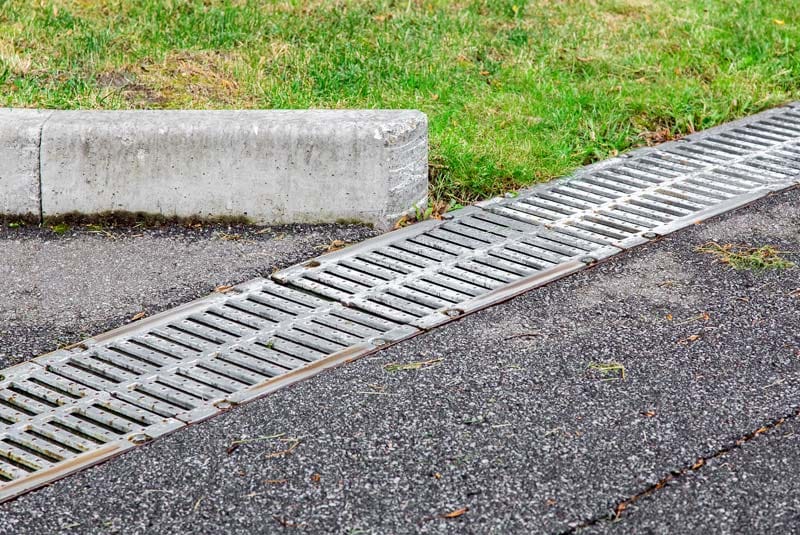
A reliable industrial walkway grating specification can be developed through a structured sequence.
Step 1: Define the users
Identify whether the walkway will carry operators, maintenance workers, carts, equipment, or a combination of these users.
Step 2: Identify the loads
List distributed, concentrated, temporary, dynamic, and impact loads.
Include maintenance conditions rather than only normal operation.
Step 3: Confirm supports
Record the clear span, support width, support material, panel-joint locations, and bearing-bar direction.
Step 4: Review the environment
Consider water, chemicals, cleaning agents, temperature, outdoor exposure, abrasion, and corrosion risks.
Step 5: Select the surface
Choose plain, serrated, close-mesh, or another profile based on walking conditions, wheels, drainage, and object retention.
Step 6: Plan fabrication
Coordinate dimensions, cutouts, toe plates, banding, stair transitions, removable sections, and panel numbering.
Step 7: Specify fastening
Define the attachment method, fastener material, quantity, location, and maintenance requirements.
Step 8: Establish inspection criteria
Decide what conditions will trigger cleaning, repair, engineering review, or replacement.
Senfa Grating’s project consultation and custom fabrication support can be used to coordinate drawings, dimensions, surface requirements, applications, openings, and fastening details before manufacturing.
Conclusion
Industrial walkway grating is a structural access component, not simply an open metal floor panel.
Its performance depends on how material, bar dimensions, spacing, support span, load distribution, surface profile, environmental exposure, fabrication, and fastening work together.
A complete specification should identify:
- Grating construction
- Material and finish
- Bearing-bar dimensions
- Bearing-bar spacing
- Cross-bar spacing
- Clear support span
- Bearing-bar direction
- Pedestrian and maintenance loads
- Concentrated wheel loads
- Surface profile
- Opening requirements
- Panel dimensions
- Cutouts and banding
- Fastening method
- Inspection requirements
When these factors are coordinated early, industrial walkway grating can provide stable, drainable, maintainable, and adaptable access around equipment and industrial structures.
FAQ
What is industrial walkway grating used for?
Industrial walkway grating creates access around machinery, tanks, conveyors, utility systems, drainage areas, and elevated platforms. Its open-grid design supports workers and maintenance activity while allowing water, air, light, and small debris to pass through.
How do I choose the correct industrial walkway grating?
Start with load type, clear span, support layout, environmental exposure, footwear, wheel size, drainage, and maintenance access. Then specify material, bearing-bar size, spacing, surface profile, finish, panel dimensions, cutouts, and fastening requirements.
Is serrated industrial walkway grating better than plain grating?
Serrated grating can improve traction in wet, oily, or contaminated areas. Plain grating may be easier to clean and comfortable in dry environments. The correct choice also depends on drainage, residue, footwear, lighting, and housekeeping practices.
Which direction should the bearing bars run?
Bearing bars should run between the structural supports because they carry the primary walkway load. Cross bars stabilize the grid but normally do not replace the bearing bars. Incorrect panel orientation can increase deflection and reduce effective load performance.
How often should industrial walkway grating be inspected?
Inspection frequency should reflect traffic, vibration, corrosion exposure, contamination, panel removal, and impact risk. Reviews should cover bearing bars, cross connections, supports, fasteners, coating condition, surface residue, panel joints, and unauthorized modifications.